Skip to content
Search
Menu

We earn a commission if you book through this link. You pay the same price.

Tours

Fishing Charters on the Emerald Coast

Last updated

Fishing charters from Fort Walton Beach and Destin: why deep water is ten miles out, the red snapper calendar explained, trip types, costs and shore fishing.

A sportfishing boat with outriggers running in deep blue offshore water under a bright skyUnsplash

The fishing fleet on this coast exists because of an accident of bathymetry, and the accident is worth understanding before you book anything.

Off most of the Gulf coast of Florida the continental shelf runs out for a very long way. From Tampa or Naples you would travel forty or fifty miles to reach water deep enough to hold the fish people fly here for. Off East Pass the shelf falls away much closer: the 100-fathom curve, where the bottom drops to around six hundred feet, sits roughly ten to twelve miles from the mouth of the pass, and beyond it the DeSoto Canyon cuts down into water measured in thousands of feet. Deep water is not a day's commitment here. It is a forty-minute run.

That single fact built Destin's fleet, which is among the largest concentrations of for-hire boats in the country and which sits seven miles east of Fort Walton Beach. It is also why the half-day offshore trip, which barely exists as a category elsewhere on the Gulf, is the backbone of the market here. A family can board at seven, be over structure in water a hundred feet deep by eight, and be back for lunch with a cooler of fish.

The second thing shaping the fishing is man-made. Okaloosa County has spent fifty years putting reef down: well over five hundred public artificial reef sites, from single concrete modules a few hundred feet off the beach to sunken barges and vessels out on the shelf. The seabed here is bare quartz sand, so every one of those structures becomes a fish magnet, and a good captain's day is a route between numbers rather than a search.

Where visitors come unstuck is the calendar. Red snapper is the fish most people arrive wanting, and the rules governing it are genuinely complicated: the season for a federally permitted charter boat and the season for a private boat with a rented rod are different lengths on different dates, and both move from year to year. Booking a trip in the wrong week and discovering you can look at snapper but not keep them is an avoidable disappointment, and the next section exists to prevent it.

None of which means you need to go offshore at all. The bay, the sound, the bayous and the pass hold redfish, speckled trout, flounder and sheepshead within sight of the Brooks Bridge, and an inshore half day out of the Fort Walton Beach side is cheaper, calmer and often better with children.
Our picks

The ones we would book

  • Editor's Pick

    Best nearshore half day for a first offshore trip

    Why we chose it

    Four to six hours on the artificial reefs a few miles out is the trip this coast does best. The structure holds fish reliably, the run is short enough that nobody gets sick, and you come home with something to eat. Ask which reef complex the captain intends to fish and whether cleaning is included.

    Top Shelf Tikis Crab Island Adventure 3 hr
    Low Supplier Cancellation Rate

    Top Shelf Tikis Crab Island Adventure 3 hr (opens in a new tab)

    Editor's PickFree cancellationInstant confirmation
    304 reviews

    Set sail on a lively 3-hour Premium Tiki Boat trip to Crab Island in Destin, Florida, where adventure and relaxation await. This…

    3 hours

    Prices checked

    from $79
  • Best Value

    Best head boat seat for the money

    Why we chose it

    A shared party boat sells a seat rather than a hull, includes rod, bait and licence, and puts you over real structure for a fraction of a private charter. You share the rail and the mate's attention, which is the honest trade. The best value per hour of anything bookable on this coast.

    Tiki heading to Crab Island Destin
    Ports of Call Tours

    Tailfins Tiki CRAB ISLAND (opens in a new tab)

    Best ValueFree cancellationInstant confirmation
    468 reviews

    You can reserve Tailfins Tikis Non-private on Viator or its affiliates for up to 7 passengers, but the vessel holds is ticketed approx…

    3 hours

    Prices checked

    from $60
  • Best for Families

    Best inshore trip with children aboard

    Why we chose it

    Four hours on the bay and the sound with light tackle, flat water and a captain used to short attention spans. Speckled trout and redfish bite often enough to keep a nine-year-old interested, which is the only metric that matters. Choose a departure from the Fort Walton Beach side to avoid the drive.

  • Best Private Tour

    Best private boat for a serious offshore day

    Why we chose it

    Once you are running out toward the shelf edge, the captain's numbers and the boat's range are what you are buying. Look for a well-found sportfisher with a working mate, confirm what is included beyond the headline rate, and budget for a gratuity. Book months ahead for anything in June or July.

  • Small Group

    Best six-pack charter for two or three anglers

    Why we chose it

    The six-passenger boat is the sweet spot for a small group that wants attention without paying for a big sportfisher. You get a private trip, a captain who can adapt to what is biting, and a rail to yourself. Considerably better than a head boat for anyone learning to fish properly.

The red snapper calendar, which confuses everybody

When to go

This is the most valuable paragraph on the page, so read it before you book.

There are two separate recreational red snapper seasons in the Gulf, and which one applies depends entirely on the boat you are standing on.

Federally permitted for-hire charter boats fish a federal season. In 2026 that opened on 1 June and was reported as running 147 days, which carries it into the autumn. The majority of the Destin charter fleet holds these permits, which is why a charter can put you on snapper in weeks when your neighbour on a rented boat cannot.

Private recreational vessels, which includes you on a rental with your own rods, fish Florida's state-water season. In 2026 that was reported as 22 May to 31 July, with additional openings from early September and around the holidays.

Both sets of dates are set annually and both have moved in recent years. Nothing on this page should be treated as the current rule. Check the federal and state announcements for the year you are travelling, or simply ask the captain when you enquire, because they know before anybody publishes it.

The practical advice is straightforward. If keeping red snapper matters to you, book a federally permitted charter rather than renting a boat, and say so when you book. If it does not, ignore the whole question: this coast fishes well for a dozen other species all year, and the weeks outside the snapper window are quieter on the water and cheaper on the dock.

What you are paying for, and roughly how much

What it costs

Charter pricing here comes in two shapes, and confusing them is how people get a shock at the dock.

Party boats and head boats sell a seat. Expect somewhere in the region of $70 to $130 a person for a four to six hour trip, with rod, bait and licence coverage included. You share the rail with twenty or thirty others, the mate works down the line, and it is comfortably the cheapest way to catch a fish offshore.

Private charters sell the boat. A four-hour inshore trip commonly runs several hundred dollars. A six-hour nearshore or offshore trip on a well-found boat is typically in four figures at the upper end, and a full-day bluewater run with a serious sportfisher goes well beyond that. This coast carries an unusual depth of that inventory: more than a fifth of everything bookable here is priced above $250, and the charter fleet is the reason.

Several things are conventionally extra and worth confirming before you pay a deposit. Fish cleaning is often a per-fish charge at the dock. Ice and drinks may or may not be aboard. A mate's gratuity in the region of fifteen to twenty percent is customary in this fishery and is not included in the headline price.

For a family of four, a six-hour private nearshore trip and four head-boat seats can come out at a similar number. The private boat buys you a captain who fishes for your group rather than the average of thirty people, and a rail that is not crowded.

Fishing here without getting on a boat

A surprising amount of this coast's fishing is done from the ground, and it is the cheapest thing in this pack.

The Okaloosa Island Pier reaches well out over the Gulf, past the first bar, and is the single best shore-based option on this stretch. It charges a modest fee to fish and a smaller one to walk out and watch, it rents tackle, and the pier's own licence covers anglers on it. What swims past changes with the month: Spanish mackerel and bluefish in the warm season, pompano in spring and autumn, king mackerel for people who know what they are doing.

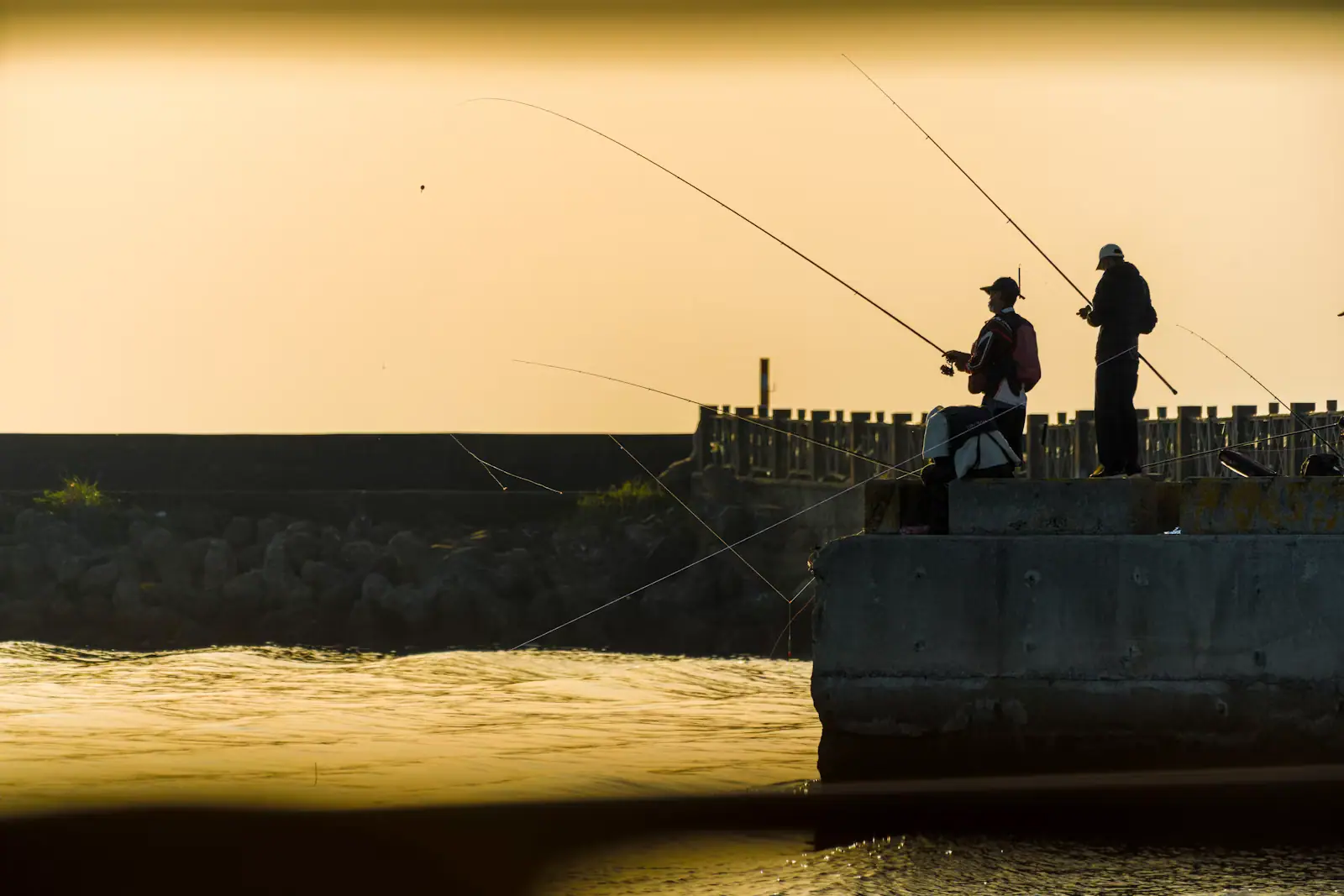
The jetties and the pass are the local's choice, and they fish hardest on moving water. The rocks are uneven, often wet and genuinely hazardous in a swell, so this is not a place to take small children or to wander after dark.

Fort Walton Landing and Liza Jackson Park put you on Santa Rosa Sound in the middle of town, with a ramp, a pier, parking and restrooms. This is flat, sheltered water and the right place to teach somebody to cast.

The surf off Okaloosa Island produces pompano and whiting from the first and second troughs, and the technique is to find the deeper cut running parallel to the beach rather than to cast as far as possible.

Anyone sixteen or older fishing from shore or a private boat needs a Florida saltwater licence unless they are exempt. It is inexpensive, issued online, and enforced.

What bites when, roughly

When to go

Fish do not read calendars precisely, so treat this as a shape rather than a schedule.

Spring, March to May. Cobia migrate along this coast in spring and are hunted from towers on the bows of boats running the beach line, which is a spectacle worth seeing even if you catch nothing. Pompano move through the surf. Triggerfish and Spanish mackerel show up on the nearshore reefs as the water warms.

Summer, June to August. The busiest fishing of the year and the core of the snapper window. Warm, generally calm mornings, reliable reef fishing, and the highest boat traffic on the water. Book early and go early, both for the flat water and to be off the Gulf before afternoon storms build.

Autumn, September to November. The quiet favourite. The crowds are gone, the water is still warm, king mackerel and bull redfish move through, and the flat-water mornings are the best of the year. If your dates are flexible, this is the window.

Winter, December to February. Fronts arrive weekly and blow out the offshore days, but between them the inshore fishing is excellent: sheepshead around every piling and bridge, redfish and trout in the bayous, and almost nobody else on the water.

Hurricane season officially runs 1 June to 30 November, and the practical effect on fishing is mostly a scattering of cancelled days rather than a closed season.

Book it

Everything else we track

Some links below go to Viator, our booking partner. We earn a commission on bookings made through them — at no extra cost to you, and with no influence on what we recommend.

Sharing, or having it to yourselves

Most of what is bookable here sells two ways, and the cheaper one is not always the cheaper one. A shared departure is priced per person; a private booking is priced for the party, so the arithmetic flips somewhere around four to six people — and it is the only version where you pick the time. Check the party size each listing actually covers before you decide.

  • Book a seat

    A shared departure, priced per person. The cheapest way to do this for one or two people.

    Anchored at Crab Island!
    Nature and Wildlife Tours

    Crab Island Charter Family Friendly 4 Hour (opens in a new tab)

    Free cancellationInstant confirmation
    137 reviews

    Experience your half day charter with your crew, offering you fun in the sun with complimentary Lilypad's and floats, toys and more for…

    4 hours

    Prices checked

    from $64.99
  • Book the whole thing

    Priced for the party rather than the seat, and you choose the departure time.

Four trips, four different days

A charter boat tied alongside a floating dock on a grey, still morningUnsplash
A charter boat tied alongside a floating dock on a grey, still morning

How they compare

The word "charter" covers a very wide range here. Match the trip to what you actually want.

TripTypical lengthWhere it goesWhat you are after
Inshore bay and sound4 hoursChoctawhatchee Bay, Santa Rosa Sound, the bayous, the bridgesRedfish, speckled trout, flounder, sheepshead. Calm water, light tackle, good with children
Nearshore reef4–6 hoursArtificial reefs within a few miles of the passSnapper, triggerfish, Spanish mackerel, bonito. The best value per hour on this coast
Offshore bottom fishing6–10 hoursStructure out toward and past the 100-fathom curveRed snapper in season, grouper, amberjack, vermilion snapper
Trolling and bluewaterFull day or overnightThe shelf edge and the DeSoto CanyonWahoo, mahi, tuna, billfish. Expensive, occasionally spectacular, no guarantees

The trip most visitors should book is the nearshore reef half day. It gets you into real fishing, it is short enough for a first-timer's stomach, the reef modules hold fish reliably, and it costs a fraction of a canyon trip.

The trip most often booked wrongly is the full-day bluewater run. It is ten or twelve hours at sea, frequently with long stretches of nothing happening, and it is a poor introduction for anyone who has not been offshore before.

The rules that catch visiting anglers out

Before you book

Gulf reef-fish regulation is stricter than most visitors expect, and ignorance is not a defence in Florida.

On a licensed charter or head boat, the vessel's licence covers you and the crew handles compliance. This is the easy route and one of the underrated reasons to book rather than rent.

On a private or rented boat, it is all yours. Three requirements catch people out:

  • The State Reef Fish Angler designation. Free, annual, and required for anyone fishing for reef fish from a private vessel in Florida, including catch and release, including anglers over sixty-five. Sign up through the state licensing system before you leave the dock.
  • Circle hooks. In the Gulf, non-stainless, non-offset circle hooks are required when fishing for reef fish with natural bait, and everyone aboard has to be using them.
  • A descending device or venting tool, plus a dehooking device, rigged and ready. Not stowed in a locker. A snapper hauled up from a hundred feet suffers barotrauma and will float rather than swim down; a descending device is what makes release survivable, and the rule now reflects that.

Bag limits, size limits and closed seasons vary by species and change between years, and grouper in particular runs on a species-by-species calendar. The state publishes current limits, and rental liveries generally keep a summary aboard. Check it on the day rather than relying on a memory of last year.

On the ground

Where to go

Every place below has its own page — hours, parking, what it costs and what to expect when you get there.

  • An aerial view of a long low bridge crossing shallow green water with a pale sandbar visible beneath the surface
    Water feature

    Choctawhatchee Bay

    Free

    Twenty-seven miles of near-tideless brackish water with one narrow way out to the Gulf, which is why everything on this coast floats on it.

    2–8 hoursFree to be on. The Mid-Bay Bridge is tolled, and boat rental, fuel and launch ramps are separate costs.

    Photograph: Earth Science and Remote Sensing Unit, NASA Johnson Space Center

  • Late light and low cloud over moving water near a narrow channel
    Water feature

    East Pass

    Free

    The only channel between Choctawhatchee Bay and the Gulf, started by four men with shovels in a 1929 flood and never closed since.

    0.5–2 hoursFree. Viewing from the Marler Bridge walkway, Norriego Point and the east jetty costs nothing.

    Photograph: Jacob Weston

  • People walking out along a long timber pier over clear green water towards open sea
    Beach

    Navarre Beach

    Free

    Four miles of low-rise beach hemmed in by federal land, with the longest fishing pier in Florida sticking out of the middle.

    3–8 hoursThe beach is free. The fishing pier charges around a dollar for a daily walk-on pass and single figures to fish.

    Photograph: Jesselikeswx

  • Reef fish over shallow rock seen from just below the surface in clear water
    Landmark

    Destin Jetties

    Free

    Two rock walls of Kentucky limestone holding the pass open, and the closest thing this coast has to a reef.

    1–4 hoursFree to reach on foot on the Destin side. Guided snorkel and dive trips from Destin Harbor are priced by the operator.

    Photograph: Unsplash

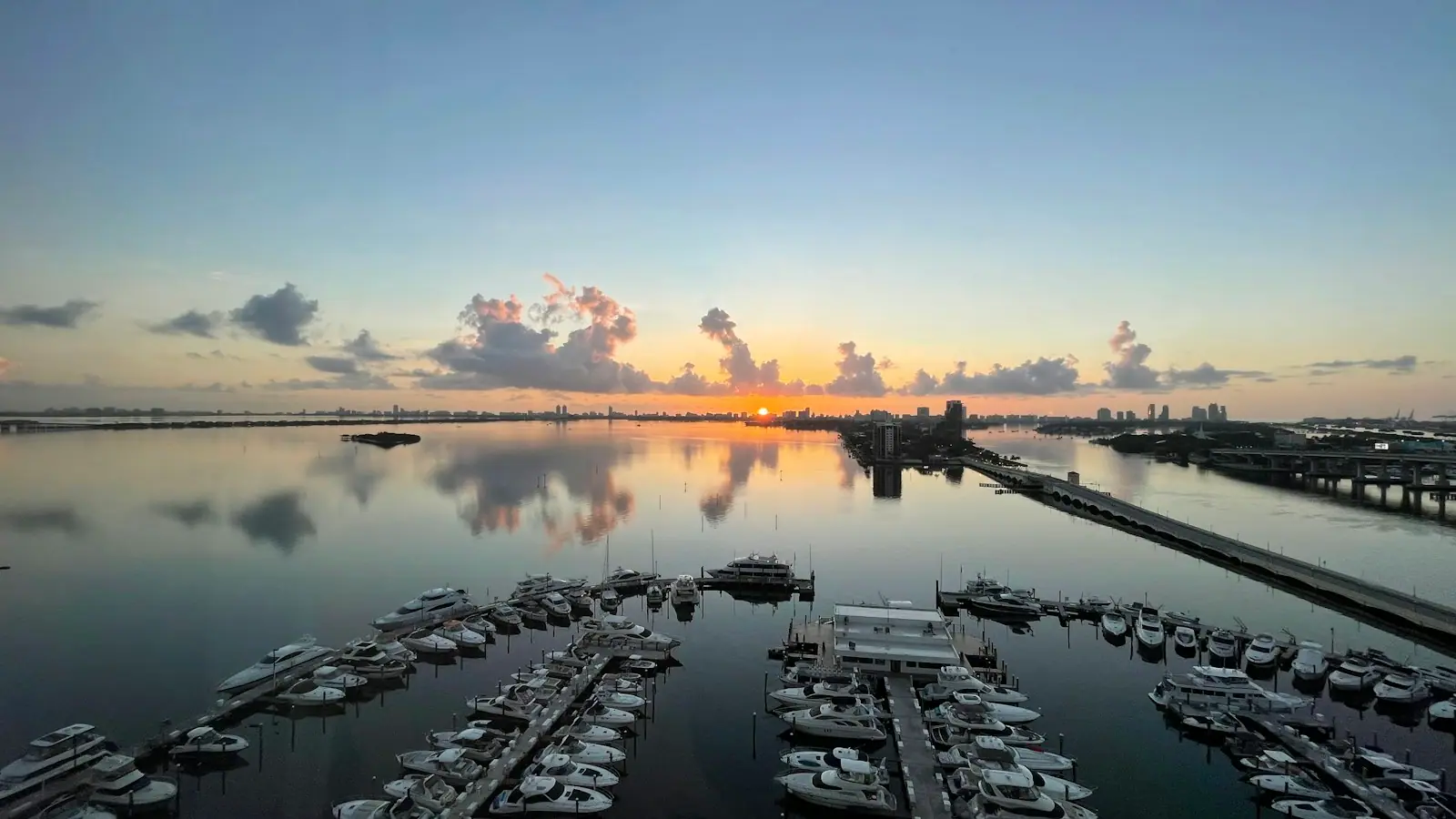
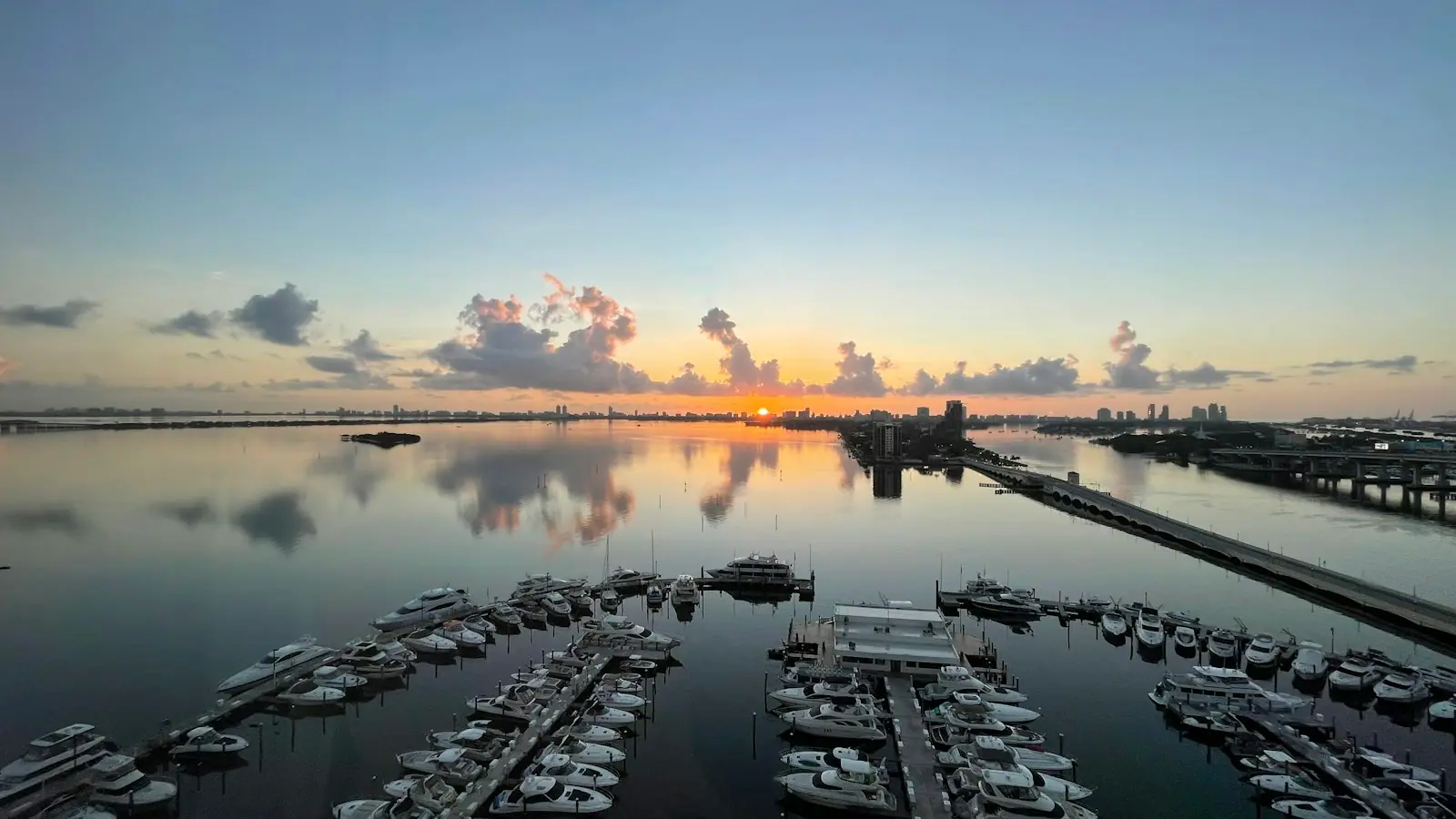
  • Rows of boats moored in a marina basin on flat water at first light
    Marina

    Destin Harbor

    Free

    Half an hour east: the largest charter fishing fleet in the country, most Crab Island departures, and the noise to match.

    1.5–8 hoursFree to walk the harbour and the boardwalk. Charters, rentals and shuttles are priced by operator, and Destin's offshore trips sit well above the regional average.

    Photograph: Wikideas1

  • Seabirds crossing low over breaking surf as the sun comes up over the water
    Landmark

    Okaloosa Island Pier

    A quarter mile of concrete over the Gulf, rebuilt after Hurricane Opal, with a separate cheaper fee if you only want to walk it.

    1–4 hoursTwo tickets: a daily fishing fee recently around eight dollars for an adult with a lower senior rate, and a cheaper sightseeing fee for walking out without a rod.

    Photograph: Earth Science and Remote Sensing Unit, Lyndon B. Johnson Space Center

  • A launch ramp sloping into flat grey water on a still morning with a low wooded shoreline beyond
    Park

    Liza Jackson Park

    Free

    The mainland's launch ramp on Santa Rosa Sound: free, open around the clock, and where a lot of Crab Island days actually start.

    1–4 hoursFree, including parking and boat launching.

    Photograph: iNaturalist user: lightbed

Straight answers

Questions people actually ask

How far offshore do you have to go to fish deep water here?

Not far, which is the whole reason this fleet exists. The 100-fathom curve, where the bottom drops to around six hundred feet, sits roughly ten to twelve miles from the mouth of East Pass, and the DeSoto Canyon is further out beyond it. On most of the Gulf coast you would run forty miles or more for the same depth. It is why a genuine offshore half day is possible from this town.

When is red snapper season in Fort Walton Beach?

There are two seasons and which applies depends on your boat. Federally permitted for-hire charter vessels fish a federal season that in 2026 opened on 1 June and was reported as running 147 days. Private recreational boats fish Florida's state season, reported in 2026 as 22 May to 31 July with additional autumn openings. Both change annually, so confirm the current dates or simply ask the captain.

How much does a fishing charter cost in Fort Walton Beach?

A head boat seat commonly runs about $70 to $130 a person for four to six hours including rod, bait and licence coverage. A private inshore half day is usually several hundred dollars for the boat. Private offshore trips on well-equipped boats reach four figures, and full-day bluewater runs go beyond that. Fish cleaning and the mate's gratuity are typically extra.

Do I need a fishing licence on a charter boat in Florida?

Not on a licensed charter or head boat: the vessel's licence covers everyone aboard and the crew handles compliance. You do need a Florida saltwater licence to fish from shore or from a private or rented boat if you are sixteen or older and not otherwise exempt. Fishing from the Okaloosa Island Pier is covered by the pier's own licence for anglers on it.

Can you fish from shore in Fort Walton Beach?

Yes, and cheaply. The Okaloosa Island Pier reaches past the first sandbar and rents tackle. The jetties at East Pass fish hard on a moving tide but are slippery and exposed. Fort Walton Landing and Liza Jackson Park put you on flat Santa Rosa Sound water with parking and restrooms. The surf off Okaloosa Island produces pompano and whiting from the trough running parallel to the beach.

What is the best time of year to fish the Emerald Coast?

Autumn, if you have a choice. September through November keeps the warm water and loses the crowds, and the flat mornings are the best of the year. Spring brings the cobia run and pompano in the surf. Summer is the busiest and covers the main snapper window. Winter blows out offshore days between fronts but fishes very well inshore for sheepshead, redfish and trout.

What are the reef fish rules for a private boat in the Gulf?

Three things catch visitors out. Anyone fishing for reef fish from a private vessel needs the free annual State Reef Fish Angler designation, including for catch and release. Non-stainless, non-offset circle hooks are required with natural bait, for everyone aboard. And a dehooking device plus a venting tool or descending device must be rigged and ready, not stowed. Size and bag limits change by species and year.