Skip to content
Search
Menu

We earn a commission if you book through this link. You pay the same price.

Things to do

Crab Island: The Sandbar That Is Not an Island

Last updated

Crab Island is a submerged sandbar, not an island. How to reach it from Fort Walton Beach by pontoon, shuttle or charter, what it costs and how deep it is.

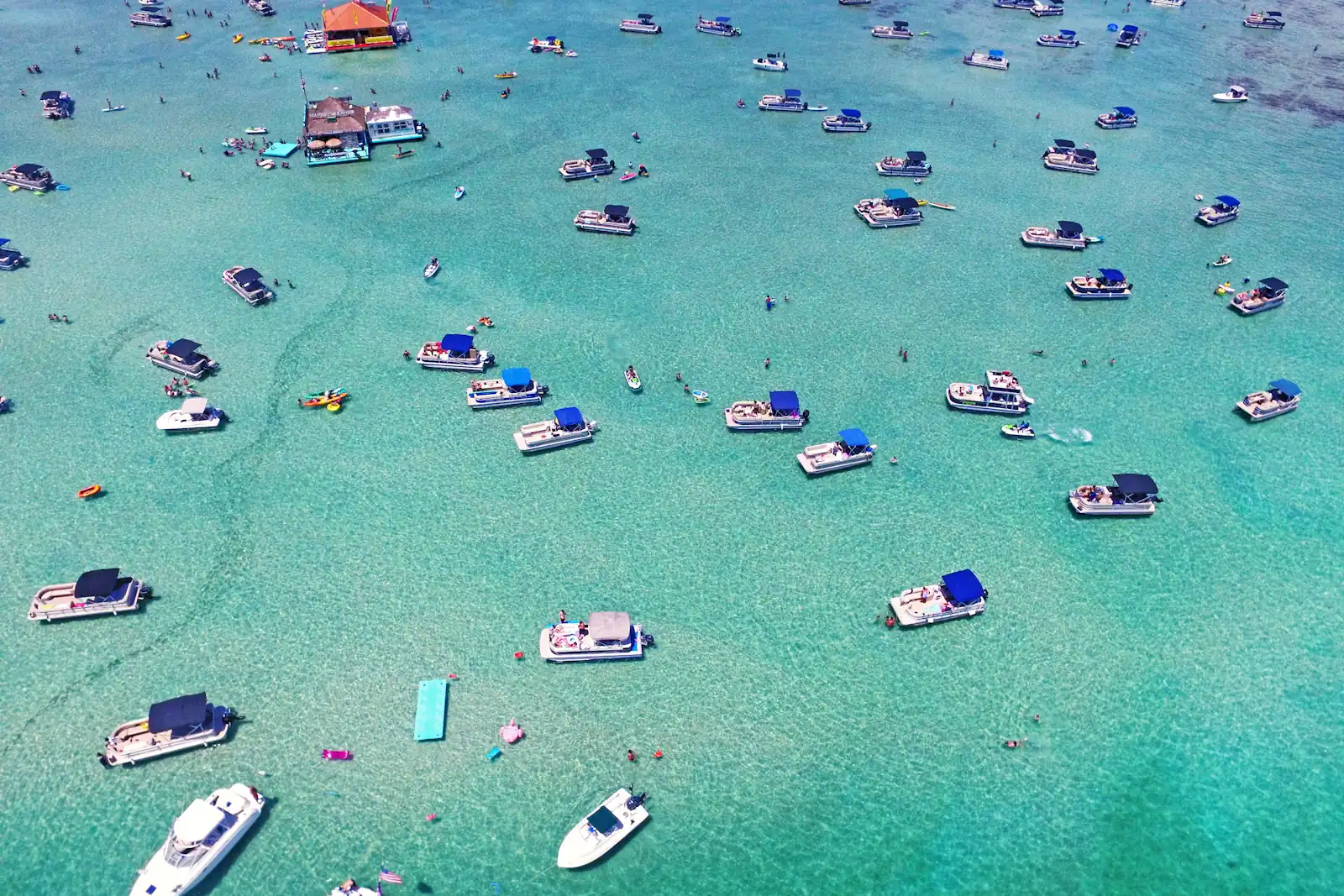
Boats moored together over clear shallow water beside a sandbank, seen from the airUnsplash

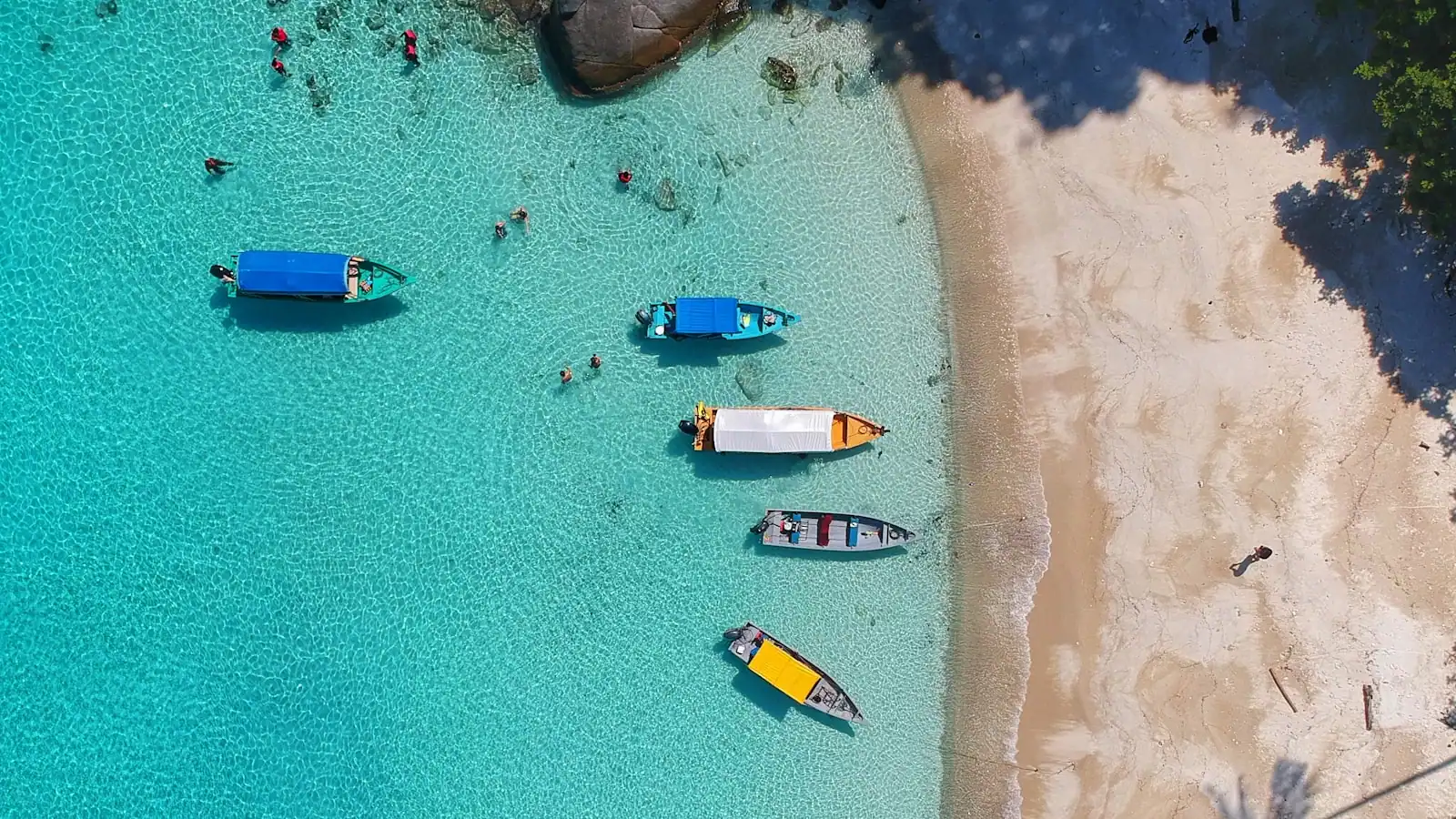
Start with the correction, because every visitor arrives needing it. Crab Island is not an island. There is no sand above the waterline, no shade, nowhere to put a towel and nothing to walk on. It is a submerged sandbar lying in Choctawhatchee Bay just north of the Marler Bridge, the span that carries US 98 over East Pass into Destin, and on a Saturday in July several hundred boats tie off above it while the people aboard stand around in water somewhere between knee and chest deep. That is the entire proposition. It is also, by a wide margin, the most searched thing on this coast.

The sandbar exists because somebody put it there. The Army Corps of Engineers began dredging East Pass in the 1930s to keep a navigable channel open for Destin's fishing fleet, and the spoil was pumped into the bay behind it, where it piled up into a genuine low island that birds nested on. Deposition stopped around the end of the 1960s, and a few years later Hurricane Eloise flattened what was left into the bar you wade on now. Accounts differ on the exact years. Nobody disputes the shape of the story: this is a piece of industrial leftover that became the region's signature attraction.

Here is the part most Crab Island articles skip, because most of them are written from Destin. You are staying in Fort Walton Beach, which puts you on the wrong side of the water. The sandbar sits roughly nine or ten miles east of the Brooks Bridge across open Choctawhatchee Bay. From a Destin Harbor dock it is a ten to fifteen minute run. From a Fort Walton Beach or Okaloosa Island ramp it is a proper bay crossing, and in an afternoon chop on a rented pontoon that can take the better part of an hour each way and be genuinely uncomfortable. So the first decision is not which boat. It is whether you drive east over the bridge and board in Destin, or stay on this side and accept the run.

The second decision is what kind of day you want. A pontoon rental gives you a base: shade, a cooler, a ladder, the freedom to sit there for six hours. A shuttle or a scheduled tour boat gives you a fixed window of two or three hours, a captain who parks the thing, and a restroom, which on a hot day with children matters more than people expect. A private charter adds the rest of the bay, and this coast carries an unusual weight of that inventory: more than a fifth of the bookable product here is priced above $250.

One honest warning before you plan around it. Crab Island in season is loud. Music from a hundred hulls, wake slapping between them, inflatables, vendor boats idling through the gaps. If your picture of a Gulf holiday is a quiet beach, this is not it, and the right answer may be to do it once for three hours and spend the rest of the week on Okaloosa Island. If your picture is a floating block party in waist-deep green water, it is the best thing on the Emerald Coast and the rest of this page is about doing it properly.
Our picks

The ones we would book

  • Editor's Pick

    Best full-day pontoon for a group that wants a base

    Why we chose it

    The reason to take a boat rather than a seat is that you get to stay. A full-day pontoon with a bimini, a ladder and room for two coolers turns the sandbar into a place you occupy rather than visit. Look for a listing that states the passenger limit and includes a fuel tank, and book a morning collection.

    Top Shelf Tikis Crab Island Adventure 3 hr
    Low Supplier Cancellation Rate

    Top Shelf Tikis Crab Island Adventure 3 hr (opens in a new tab)

    Editor's PickFree cancellationInstant confirmation
    304 reviews

    Set sail on a lively 3-hour Premium Tiki Boat trip to Crab Island in Destin, Florida, where adventure and relaxation await. This…

    3 hours

    Prices checked

    from $79
  • Best Value

    Best shuttle for getting there cheaply

    Why we chose it

    The scheduled shuttle is the sensible first booking for two people who do not want to drive a boat. You pay per seat rather than per hull, somebody else anchors, and the run out of the harbour takes a quarter of an hour. Two to three hours is enough for most first visits. Check whether a restroom is aboard.

    Tiki heading to Crab Island Destin
    Ports of Call Tours

    Tailfins Tiki CRAB ISLAND (opens in a new tab)

    Best ValueFree cancellationInstant confirmation
    468 reviews

    You can reserve Tailfins Tikis Non-private on Viator or its affiliates for up to 7 passengers, but the vessel holds is ticketed approx…

    3 hours

    Prices checked

    from $60
  • Best for Families

    Best captained trip with small children aboard

    Why we chose it

    With a five-year-old, the difference between a good day and a bad one is a head on board and an adult whose only job is the boat. A captained trip of two to three hours solves both. Ask about shade and whether child-sized flotation is supplied, and take the earliest departure of the day.

  • Best Private Tour

    Best private charter for six or more

    Why we chose it

    This coast carries an unusual weight of private inventory, and above about six people the per-head arithmetic stops looking silly. What you buy is a captain who can read the bar on the day, move you if the raft is too tight, and run you out through East Pass afterwards. Book further ahead than you think for July.

    Take in a view only found on the Emerald Coast!
    Low Last Minute Supplier Cancellation Rate

    Crab Island Pontoon Boat Rentals (opens in a new tab)

    Best Private TourFree cancellationPrivate tour
    322 reviews

    Want the easiest way to get to Crab Island without dealing with traffic, crowds, or complicated rentals? Your Crab Island adventure starts…

    2 hours

    Prices checked

    from $199
  • Small Group

    Best small boat for a first look at the bay

    Why we chose it

    A six or eight-passenger boat with a narrating captain covers the sandbar, the pass, the bridge and usually some dolphins in the space of a morning. Choose this over a full-day rental if you want to understand the water before you commit a whole holiday to it. Ask whether the trip stops at the bar or just passes it.

  • Most Booked

    Best combined sandbar and dolphin run

    Why we chose it

    Most sandbar boats pass the pass on the way, and the resident dolphins work it hard, so operators pair the two. The combination suits a half day better than either does alone. Confirm how long the boat actually stays over the bar, because on some itineraries the answer is twenty minutes.

How a dredge spoil became the busiest water in Florida

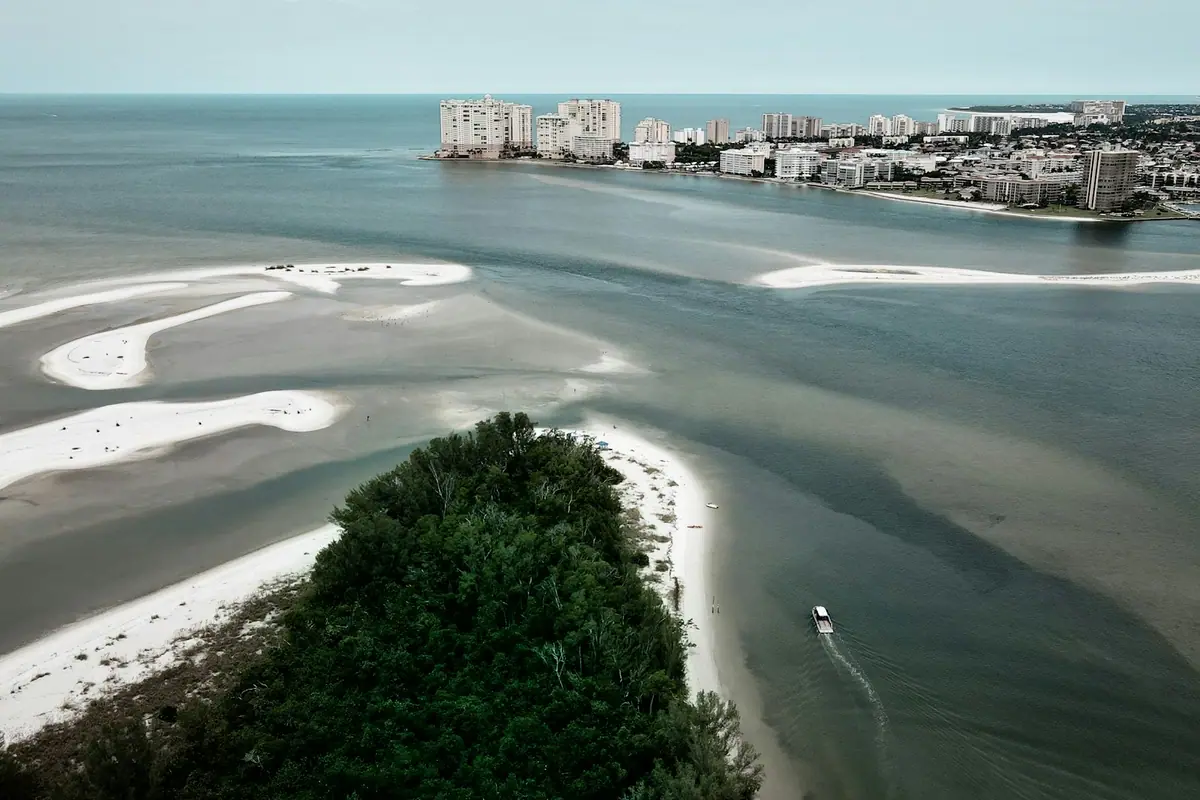
Aerial view of a narrow tidal pass cut between two low sandy shorelinesUnsplash
Aerial view of a narrow tidal pass cut between two low sandy shorelines

East Pass is the only opening between Choctawhatchee Bay and the Gulf, and keeping it open has been an engineering project for the better part of a century. When the Army Corps dredged the channel to make it dependable for Destin's boats, the material had to go somewhere, and it went into the bay immediately north of the pass. Over successive dredging cycles the spoil built up into a real island with dry ground, scrub and nesting birds on it.

Deposition stopped around the late 1960s. A bar of loose dredged sand in a tidal bay is not a permanent landform, and in September 1974 Hurricane Eloise came ashore on this stretch of coast and took the top off it. What was left settled into the shallow, flat-topped bank that sits there today, close enough to the surface that you can stand on it and deep enough that a pontoon floats above it.

The name outlived the land, which is why the correction at the top of this page is necessary at all. Search results, road signs and half the merchandise in Destin refer to an island that has not existed in any meaningful sense since before most of the people standing on it were born.

It is worth knowing the history for one practical reason. This is loose sand in moving water, not bedrock. The bar shifts, the shallow part is not in exactly the same place every season, and the edges where it falls away into the dredged channel are steeper than they look from a boat. Treat depth here as something you check on the day rather than something you memorise.

The floating shops, and what you cannot buy

A small commercial fleet works the sandbar in season, and it is one of the odder sights in American tourism: a hamburger boat, an ice cream boat, a boat that opens fresh coconuts and hands them over with a straw in the top, inflatable obstacle courses and waterslides anchored off to one side and rented by the hour.

They come and go year to year, they operate mainly from late spring into early autumn, and they are effectively absent midweek in winter. Do not plan a day around a specific vendor being there.

The thing worth knowing before you pack is that alcohol has not been sold at the sandbar in recent years. Okaloosa County stopped permitting vendor boats to sell it, so if you want a drink you bring it with you, in your own cooler, on your own boat. Glass is a bad idea in any water people stand up in, and several rental companies prohibit it outright. Read the rental agreement rather than assuming.

The corollary is that everything you need for the day goes aboard before you leave the dock: water first and in larger quantity than feels sensible, food, sun cover, a dry bag for phones, and a rubbish bag, because what blows off your boat stays in the bay. Cash is worth having. Signal at the sandbar is usually adequate but not reliable enough to depend on for a card payment.

Tide, day of the week and time of year

When to go

Tide first. Aim to be over the bar from about mid-tide to high. The shallow area is bigger and more forgiving then, the current across it is gentler than on a hard ebb, and you are less likely to end the afternoon aground. If you anchor in three feet at high water you may be sitting on sand two hours later, which is a nuisance in a rental and a real problem in a deep-draught boat.

Day of the week. The difference between a Tuesday and a Saturday in July is not marginal. Midweek you get a crowd; on a summer weekend or a holiday you get something closer to a boat park, with anchoring space at a premium and wake slapping between hulls all afternoon. If your week allows any flexibility at all, use it here.

Time of day. Mornings are calmer in every sense. The bay is flatter before the sea breeze fills in, the vendor boats are less busy, and the drive east over the Brooks Bridge is quicker. Mid-afternoon is the peak of everything, including the summer thunderstorm risk, which on this coast builds over the interior and arrives fast.

Season. June through August is the sandbar at full volume. May and September are the sweet spot: water still warm, crowd thinner, rental rates softer. April brings spring break traffic in bursts. From November into March the water is cold, the vendor fleet has gone, and the bar is a quiet piece of bay that a few locals fish. That is a different and perfectly good experience, but it is not the one people book flights for.

If you are driving the boat yourself

Local tips

  • The licence question. There is no such thing as a Florida boating licence. What the state applies instead is a date-of-birth test: a birthday in 1988 or later and you must carry its Boating Safety Education Identification Card to run anything above ten horsepower. Visitors can sit a short approved course, or take the temporary certificate a livery can write once it has briefed you. Bring photo ID as well. Turning up without either is the most common way a rental morning falls apart.
  • Anchor for the tide you will have, not the tide you have. Set the hook in enough water that a two-foot fall still leaves you floating, and give yourself proper scope. The bottom here is soft, and boats drag when the raft gets thick.
  • Anchor outside the channel. The marked channel through the bay carries real traffic, including boats considerably larger than yours. Never tie to a navigation marker.
  • The run from this side. If you launch at a Fort Walton Beach ramp, you have roughly nine or ten miles of open bay ahead of you. Do it in the morning while the water is flat. Coming home across a chop at four in the afternoon in a loaded pontoon is a long, wet, slow trip, and it is the reason many visitors on this side choose to board in Destin instead.
  • Idle zones are enforced. Destin Harbor and the approaches to the pass carry slow-speed and manatee zones. Budget the time rather than the fine.
  • Fuel is on you. Most rentals come with a tank and bill the difference on return. A full day of running plus an idling generator-free afternoon is less fuel than people fear, but confirm the arrangement before you sign.

Who should skip it, and what to do instead

This page would be dishonest if it only sold the thing.

Skip it if you want quiet. A summer Saturday at the sandbar is the opposite of a quiet beach day, and no amount of anchoring on the far side fixes that. Skip it if nobody in your party is comfortable in moving water, because the current and the drop-offs are real and there is nobody watching. Skip it if you are travelling with a toddler and you have booked a rental pontoon without a restroom; take the shuttle or a tour boat instead, which is the single most useful piece of advice on this page.

And consider skipping it if you are only here for three days and the weather is marginal. A grey, windy day on the sandbar is cold, the vendor boats stay home, and the whole thing makes no sense.

The good news is that Fort Walton Beach has the antidote about four minutes from the bridge. John Beasley Park and The Boardwalk on Okaloosa Island put you on the open Gulf beach with lifeguards, a walkover, restrooms and the emerald water the coast is named for. The bay side of Okaloosa Island and the Santa Rosa Sound shoreline around Fort Walton Landing give you flat, shallow, sheltered water to paddle without any of the traffic. And the Okaloosa Island Pier puts you out over the Gulf for a couple of dollars without getting on a boat at all.

Do the sandbar once, on a weekday, in the morning. Then go and have the quiet version of this coast, which is the version Fort Walton Beach is actually good at.

Book it

Everything else we track

Some links below go to Viator, our booking partner. We earn a commission on bookings made through them — at no extra cost to you, and with no influence on what we recommend.

Sharing, or having it to yourselves

Most of what is bookable here sells two ways, and the cheaper one is not always the cheaper one. A shared departure is priced per person; a private booking is priced for the party, so the arithmetic flips somewhere around four to six people — and it is the only version where you pick the time. Check the party size each listing actually covers before you decide.

  • Book a seat

    A shared departure, priced per person. The cheapest way to do this for one or two people.

    4 Hour Crab Island Adventure Tour in Destin
    Private and Luxury

    4 Hour Crab Island Adventure Tour in Destin (opens in a new tab)

    Free cancellationInstant confirmation
    46 reviews

    Explore the vibrant scene at Crab Island, a must-see destination known for its lively atmosphere and stunning waters. This 4-hour…

    4 hours

    Prices checked

    from $67
  • Book the whole thing

    Priced for the party rather than the seat, and you choose the departure time.

Five ways across, and what each one buys

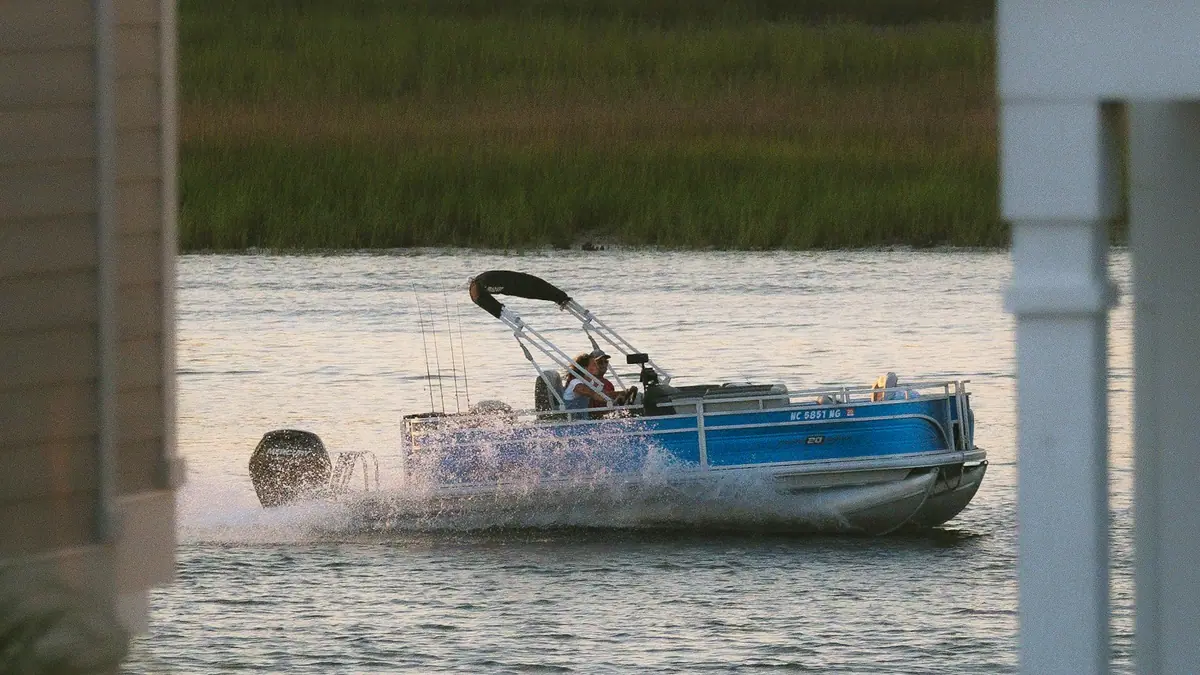
A blue pontoon boat under way on flat water past a low waterfront shorelineUnsplash
A blue pontoon boat under way on flat water past a low waterfront shoreline

How they compare

There is no bridge, no path and no legal way to swim to it. Everything below is a boat. Prices are bands seen advertised on this coast rather than quotes, and they move with the season, so check before you commit.

HowRough costWhat you getThe catch
Rent a pontoonAround $350–$450 half day, $550–$700 full day, plus fuelYour own base all day: shade, cooler space, a ladderYou captain it, you anchor it, and most have no restroom
Shuttle boatOften $45–$70 an adult for two to three hoursCheapest way onto the bar, a crew that parks it, usually a head aboardFixed departure and return, shared deck
Guided tour boatTypically $50–$90 a headNarration, a captain who knows today's shallow spotA tour that stops at the bar is not a day on it
Private charterWell above $250 for the boat, often several hundredA captain, your schedule, the rest of the bay afterwardsMakes sense at six or more, and books out in season
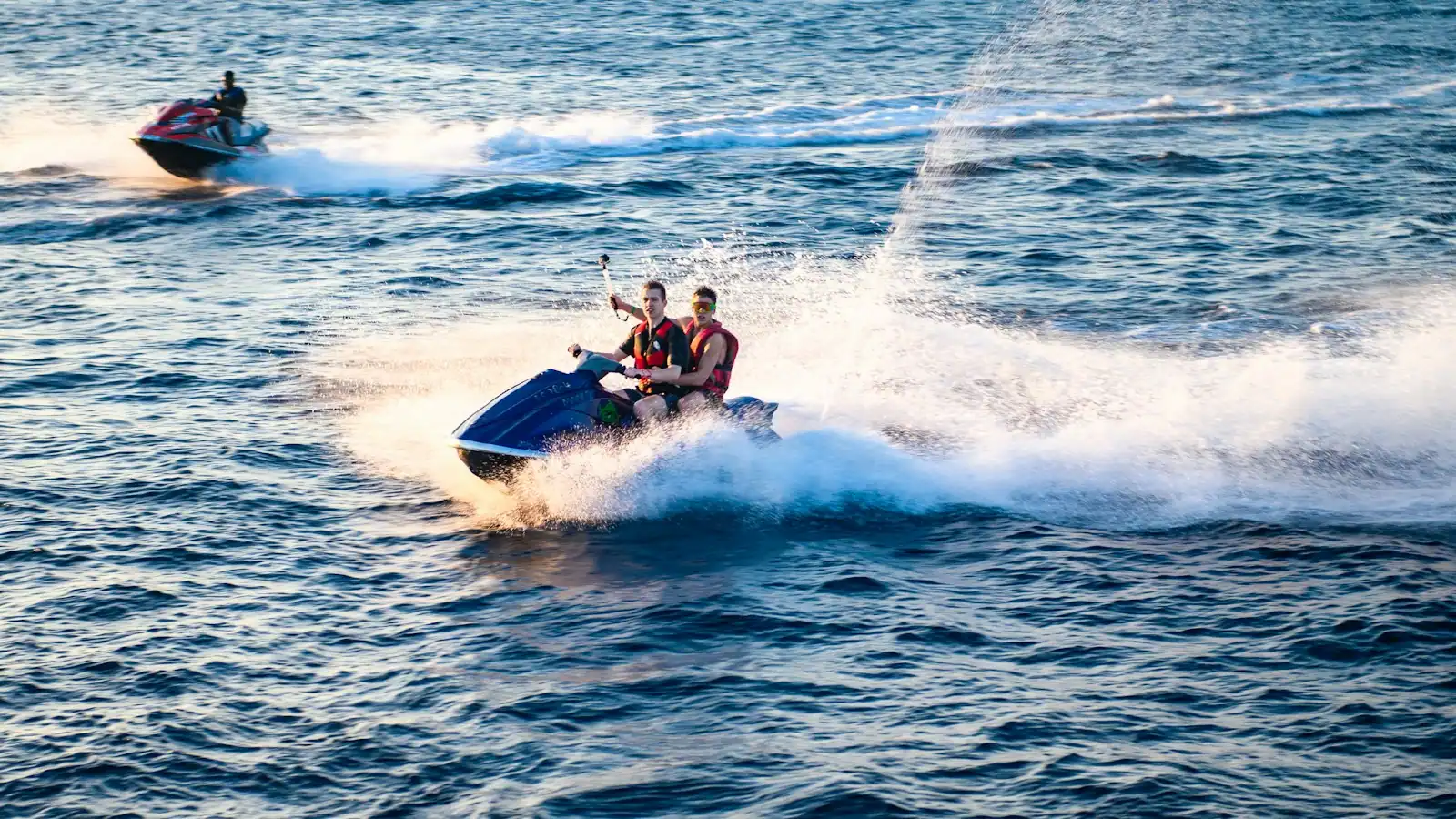
Guided jet ski$150–$250 a machine for a led two-hour runTurns the crossing itself into the activityNo cooler, nowhere to sit still, no shade

From Fort Walton Beach, the operators are concentrated in Destin Harbor, which means a drive east over the Brooks Bridge and along US 98. Allow for it. That road is the only through route on this coast and it does not cope well with a July afternoon.

What the water is actually like out there

Before you book

Depth over the bar is usually somewhere between about one and four feet, and it changes through the day with the tide and from one spot to the next. Most of the time an adult stands comfortably. That is the whole appeal, and it is also what makes people careless.

Three things deserve real attention.

The edges. The bar does not slope away gently. It falls off into dredged channel, and the drop can put water well over your head within a few paces of where you were standing. Children drift. Keep them upcurrent of you rather than downcurrent, and put flotation on anyone who is not a confident swimmer, whatever the depth looks like where you are standing.

The current. Every drop of water in a bay of roughly 130 square miles drains through one pass, and East Pass is a couple of hundred yards away. On a hard-running ebb the flow past the bar is genuinely strong, and it is pulling toward the pass and the Gulf. Nobody should be swimming toward the bridge, at any state of tide.

The traffic. On a peak Saturday this is one of the densest concentrations of recreational boats anywhere in Florida, and people are in the water between the hulls. Assume nobody can see you. Stay inside the raft of anchored boats rather than wandering out into the space where somebody is manoeuvring.

There are no lifeguards here, no shade and, on most rental pontoons, no restroom. Florida requires children under six to wear a flotation device under way on a boat under twenty-six feet, and law enforcement is visible around the sandbar through the summer.

On the ground

Where to go

Every place below has its own page — hours, parking, what it costs and what to expect when you get there.

  • Aerial view of small boats anchored together on shallow clear water beside a pale sandbar
    Water feature

    Crab Island

    Free

    A submerged sandbar north of the Destin bridge where the bay runs waist-deep and several hundred boats raft up. Reachable only by water.

    3–8 hoursThe sandbar itself is free public water. The cost is the boat: shuttle seats at the low end, pontoon rentals in the mid hundreds for a half or full day, private charters higher.

    Photograph: Nicolas Henderson

  • An aerial view of a long low bridge crossing shallow green water with a pale sandbar visible beneath the surface
    Water feature

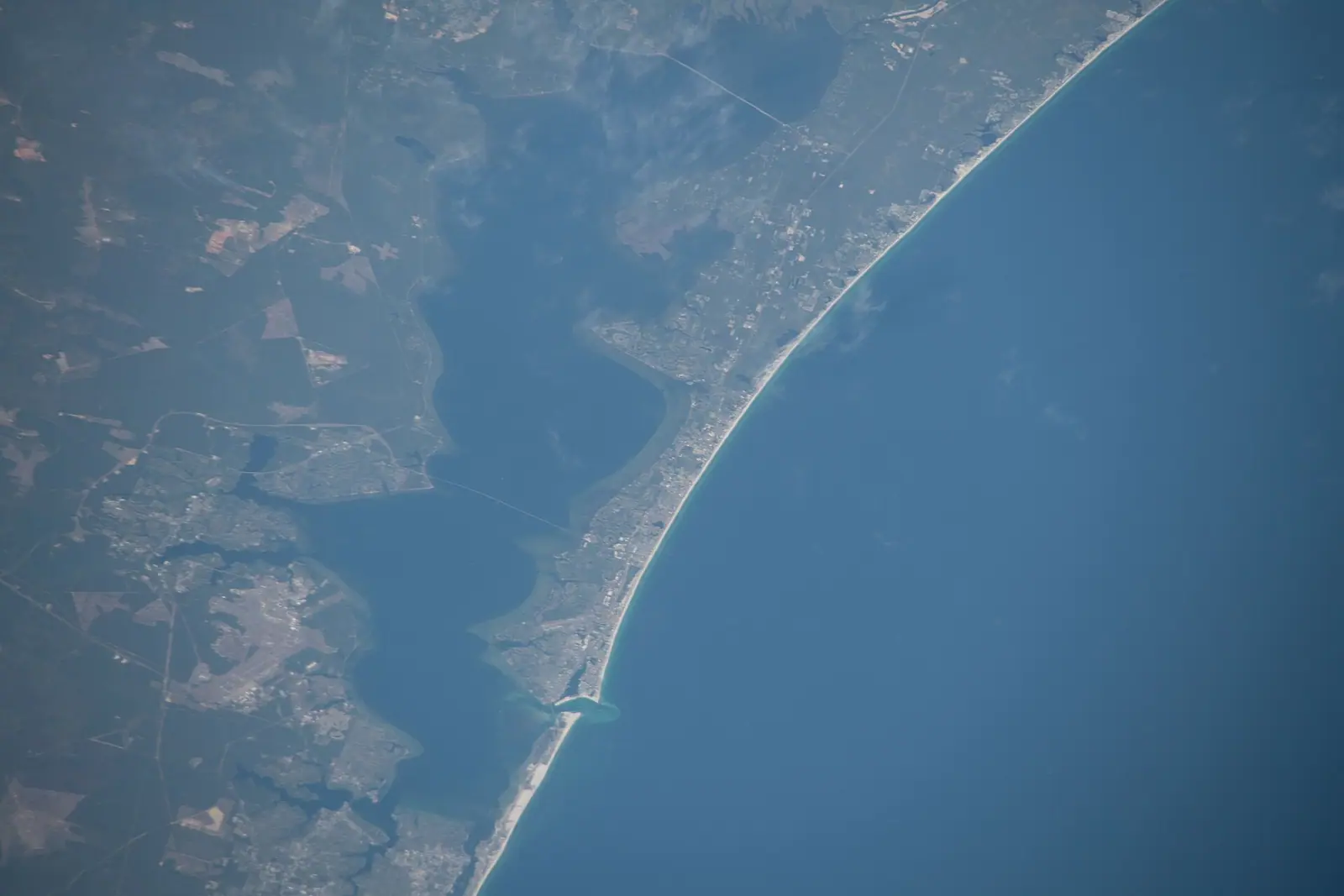
    Choctawhatchee Bay

    Free

    Twenty-seven miles of near-tideless brackish water with one narrow way out to the Gulf, which is why everything on this coast floats on it.

    2–8 hoursFree to be on. The Mid-Bay Bridge is tolled, and boat rental, fuel and launch ramps are separate costs.

    Photograph: Earth Science and Remote Sensing Unit, NASA Johnson Space Center

  • Late light and low cloud over moving water near a narrow channel
    Water feature

    East Pass

    Free

    The only channel between Choctawhatchee Bay and the Gulf, started by four men with shovels in a 1929 flood and never closed since.

    0.5–2 hoursFree. Viewing from the Marler Bridge walkway, Norriego Point and the east jetty costs nothing.

    Photograph: Jacob Weston

  • Sea oats growing on a low dune above a wide pale beach under a broad sky
    Neighbourhood

    Okaloosa Island

    Free

    The county-owned beach strip across the sound from town: three miles of Gulf front, free parking, and no city government at all.

    3–10 hoursFree, with free parking at the county beach accesses and the Boardwalk.

    Photograph: SrA Carlin Leslie

  • Reef fish over shallow rock seen from just below the surface in clear water
    Landmark

    Destin Jetties

    Free

    Two rock walls of Kentucky limestone holding the pass open, and the closest thing this coast has to a reef.

    1–4 hoursFree to reach on foot on the Destin side. Guided snorkel and dive trips from Destin Harbor are priced by the operator.

    Photograph: Unsplash

  • Rows of boats moored in a marina basin on flat water at first light
    Marina

    Destin Harbor

    Free

    Half an hour east: the largest charter fishing fleet in the country, most Crab Island departures, and the noise to match.

    1.5–8 hoursFree to walk the harbour and the boardwalk. Charters, rentals and shuttles are priced by operator, and Destin's offshore trips sit well above the regional average.

    Photograph: Wikideas1

  • A launch ramp sloping into flat grey water on a still morning with a low wooded shoreline beyond
    Park

    Liza Jackson Park

    Free

    The mainland's launch ramp on Santa Rosa Sound: free, open around the clock, and where a lot of Crab Island days actually start.

    1–4 hoursFree, including parking and boat launching.

    Photograph: iNaturalist user: lightbed

Straight answers

Questions people actually ask

Is Crab Island a real island?

No. Crab Island is a submerged sandbar in Choctawhatchee Bay just north of the Marler Bridge at Destin, and there is no dry land there at all. It began as a spoil island built from material dredged out of East Pass, and a hurricane in the mid-1970s reduced it to the shallow bank people stand on today. You float over it, wade on it, and go home to sleep somewhere else.

How do you get to Crab Island from Fort Walton Beach?

By boat, and only by boat. Most visitors drive east over the Brooks Bridge and along US 98 to a Destin Harbor operator, which puts them ten to fifteen minutes from the sandbar. The alternative is launching at a Fort Walton Beach ramp and running roughly nine or ten miles east across open Choctawhatchee Bay, which is a fine morning trip and an uncomfortable afternoon one in a chop.

How deep is the water at Crab Island?

Usually somewhere between about one and four feet over the bar itself, varying with the tide and with exactly where you stand. Most adults are comfortable. The important caveat is the edges: the bar falls away into dredged channel, so the water can go well over your head a few paces from where you were standing. Keep children in flotation regardless of how shallow it looks.

How much does it cost to go to Crab Island?

Rates move with the season, so treat these as bands. A shared shuttle seat is often around $45 to $70 an adult for two to three hours. A rental pontoon is commonly in the $350 to $450 range for a half day and $550 to $700 for a full day, plus fuel. Private charters on this coast frequently run several hundred dollars. Confirm current pricing before you book.

Can you buy alcohol at Crab Island?

Not from the vendor boats. Okaloosa County stopped permitting the sale of alcohol at the sandbar several years ago, so the floating shops sell food, ice cream and coconuts but nothing to drink beyond that. People bring their own coolers instead. Check your rental agreement, because many liveries ban glass outright and some restrict alcohol aboard entirely.

Is Crab Island safe for kids?

It can be, with supervision. The water is shallow, warm and calm in the middle of the bar, which is exactly why children love it. The hazards are the sudden drop-offs at the edges, the tidal current running toward East Pass, and a dense crowd of manoeuvring boats. There are no lifeguards. Put young children in flotation, keep them inside the raft of anchored boats, and choose a captained trip with a restroom over a bare rental.

What is the best time of day to go to Crab Island?

Morning, and ideally on a rising or high tide. The bay is flatter before the sea breeze fills in, the crowd is thinner, the shallow area is larger and more forgiving near high water, and you avoid the afternoon thunderstorms that build over the interior in summer. A weekday morning in May or September is the best version of this place. A July Saturday afternoon is the busiest.

Do you need a boating licence to rent a pontoon in Destin?

Florida has no boating licence as such. It has an education requirement pinned to your year of birth: 1988 onwards, and the state's Boating Safety Education Identification Card has to be in your pocket before you run a motor above ten horsepower. Visitors can take an approved course online, or accept the temporary certificate a livery can write once it has briefed you. Bring photo identification too, and expect both to be checked.