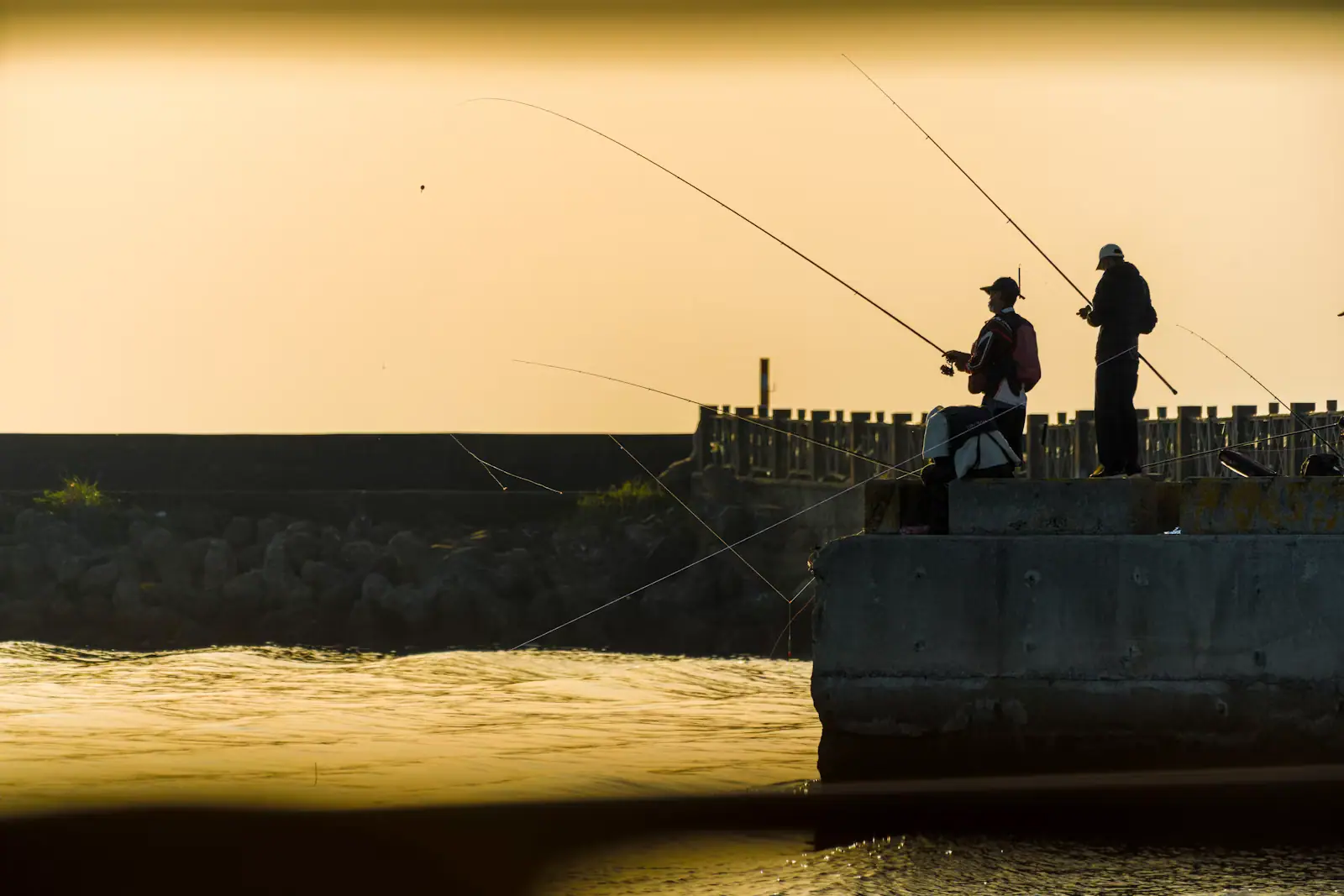
Destin has been trading on the phrase "World's Luckiest Fishing Village" since a Florida governor is credited with saying something like it in 1956, and behind the slogan there is a real number: the largest charter fishing fleet in the state, well over a hundred boats working out of one harbour eight miles from Fort Walton Beach.
That fleet dominates the search results and it is not what most visitors need. There are five distinct fisheries here and only one of them costs hundreds of dollars.
The five, cheapest first
| Fishery | Where | What you catch | What it takes |
|---|---|---|---|
| Pier | Okaloosa Island Pier | Spanish and king mackerel, pompano, whiting, ladyfish, the odd cobia | Single-digit dollars, a rented rod, patience |
| Surf | Any Gulf beach | Pompano, whiting, redfish, bluefish | Your own gear, a licence, dawn |
| Bay and bayou | Choctawhatchee Bay, Santa Rosa Sound, the bayous | Speckled trout, redfish, flounder, sheepshead | A small boat or a kayak |
| Pass and jetties | East Pass, the Destin jetties | Redfish, mangrove snapper, sheepshead, big trout | Local knowledge and respect for the current |
| Offshore | The ledges and artificial reefs | Red snapper, grouper, amberjack, trolling species | A charter and a chunk of the budget |
Start on the pier
The Okaloosa Island Pier runs 1,262 feet into the Gulf, close to a quarter of a mile. The present structure opened in 1998, replacing a 962-foot pier built in 1972 that storms eventually took apart.
Two things make it the best value in the county. First, the fishing fee is single-digit dollars for an adult, less for children and seniors, and a walk-on ticket for non-anglers is a couple of dollars. Second, your Florida fishing licence is covered by the pier's own licence for the day, which removes the single administrative obstacle that stops most visiting families trying at all. Rods rent for a few dollars at the shop by the entrance.
What comes over the rail changes with the season. Spanish mackerel and pompano in spring and autumn, king mackerel through the warm months, whiting and ladyfish almost always, and every so often a cobia cruising past in the spring migration that turns the whole deck into a scramble.
The cobia run is this coast's spring event
For a few weeks in roughly March and April, cobia migrate east along the Panhandle close to the beach, and a particular local culture exists around intercepting them: boats with tall spotting towers running the beach line, somebody up top looking for a brown shape in the green water, a rod ready to be pitched at it. It is sight-fishing, it is nothing like bottom fishing, and it is over by May.
You can also catch them from the pier. If you hear the deck go quiet and then loud, that is what happened.
The bay is the underrated half
Choctawhatchee Bay and the bayous that feed it are a completely different fishery from the Gulf: shallower, calmer, cheaper to access, and fishable from a kayak. Speckled trout over grass, redfish along the marsh edges and under docks, flounder on the sandy drop-offs, sheepshead around any piling in winter.
A kayak or a small rental boat out of Liza Jackson Park or Rocky Bayou opens this up for a fraction of what a Gulf charter costs, and on a windy day when the offshore boats are cancelling, the bayous are flat.
East Pass and the jetties
The jetties at East Pass are a landmark and a fishery, and the current running through that gap is serious. Fish stack up in the rips on both tides and anglers work the rocks from boats and from the shore.
The honest advice is to fish the pass with somebody who knows it, at least the first time. An outgoing tide against a southerly wind makes the throat of the pass genuinely dangerous water for a small boat, and the rocks are unforgiving to anyone wading them at the wrong state of tide.
Offshore, and what you are actually paying for
The Gulf floor off Destin is limestone ledges and a substantial programme of deployed artificial reefs, close enough inshore that a four-hour bottom trip is a real trip rather than a token one. That proximity is why the fleet is here.
The cheapest way out is a party boat, sold by the head with tackle and licence included, running a few hours to nearshore structure. A private charter for four costs many times that per head and buys you the boat, the spot choice and a mate who unhooks things. Six-hour and full-day trips go further out for bigger bottom fish and trolling species, and the price climbs fast with time and distance because it is mostly fuel.
Ask three things before you book: how long the run is at each end, whether the price includes fish cleaning, and what the cancellation policy is for weather. The last one matters more here than anywhere, because a Gulf forecast at 6am decides your day.
Seasons, and the one that moves every year
Most of what you can catch here is open most of the year. Red snapper is not, and it is the species people travel for.
Florida sets a Gulf private-recreational red snapper season annually, and the federal for-hire season (for charter boats holding a federal reef fish permit) is set separately and is usually longer and continuous. In 2026 the private-recreational season opened on 22 May with a summer block running to 31 July and additional autumn and winter dates extending into early January 2027, while the federal for-hire season ran from 1 June to 26 October. The state described the combined 2026 arrangement as the longest Gulf season since Florida took over management.
None of that is a rule. It is one year's dates. Check the current season with the Florida Fish and Wildlife Conservation Commission before you book a trip around snapper, and note that the boat's permit type decides which season applies to you.
Licences, briefly
Fishing from a licensed pier or on a licensed charter boat is generally covered by that operator's licence. Fishing from your own boat, from a kayak, or from the beach is not, and non-residents need a Florida saltwater licence. They are sold online and at tackle shops, in durations from a few days upwards. Bag and size limits differ by species and change; the FWC's own app is the only version worth trusting on the water.
The month that belongs to fishing
The Destin Fishing Rodeo has run every October since 1948 and effectively turns the month into a public weigh-in, with boats bringing catches to the scales on the harbour every day and a leaderboard that anyone can enter. The Destin Seafood Festival sits alongside it on the harbour boardwalk early in the month.
October is also, not coincidentally, one of the best months to be on this water: the summer crowds have gone, the Gulf is still warm, and the bait is moving.
When to cancel, and who decides
Offshore trips here are cancelled by sea state rather than by rain. A three-foot Gulf swell at four seconds is unpleasant; the same height at eight seconds is fine. Captains read the period, not just the height, and a good one will call you at six in the morning and tell you honestly that today is a bad idea.
Take that call. The people who insist on going anyway are the ones who spend four hours below the gunwale and remember nothing else about the trip.
Two rules worth holding to. First, ask at booking what happens if the captain cancels and what happens if you do: they are usually very different, and the second one often costs you. Second, if anyone in the group is prone to seasickness, take the medication the night before and again in the morning rather than at the dock; it does not work retroactively.
Summer afternoons bring the other hazard, which is lightning rather than swell. Cells build inland over Eglin's ranges and move south with very little warning. Morning trips are the safer booking in July and August.
Last updated
Opening hours, ordinances and prices move with the season. We re-check this guide rather than rewrite it, and the date above is the last time someone did. How we research and correct.