Skip to content
Search
Menu

We earn a commission if you book through this link. You pay the same price.

Tours

Dolphin Tours on Choctawhatchee Bay

Last updated

Dolphin tours in Fort Walton Beach and Destin: the resident bay population, why East Pass concentrates them, what trips cost and the hour that works best.

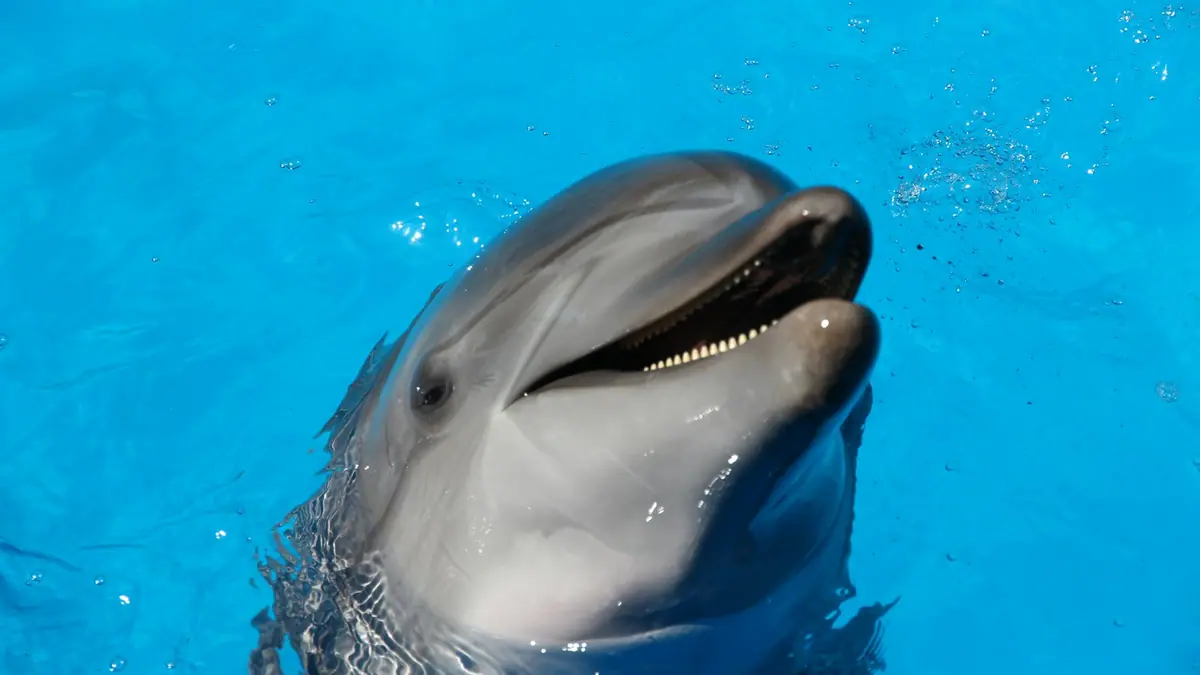
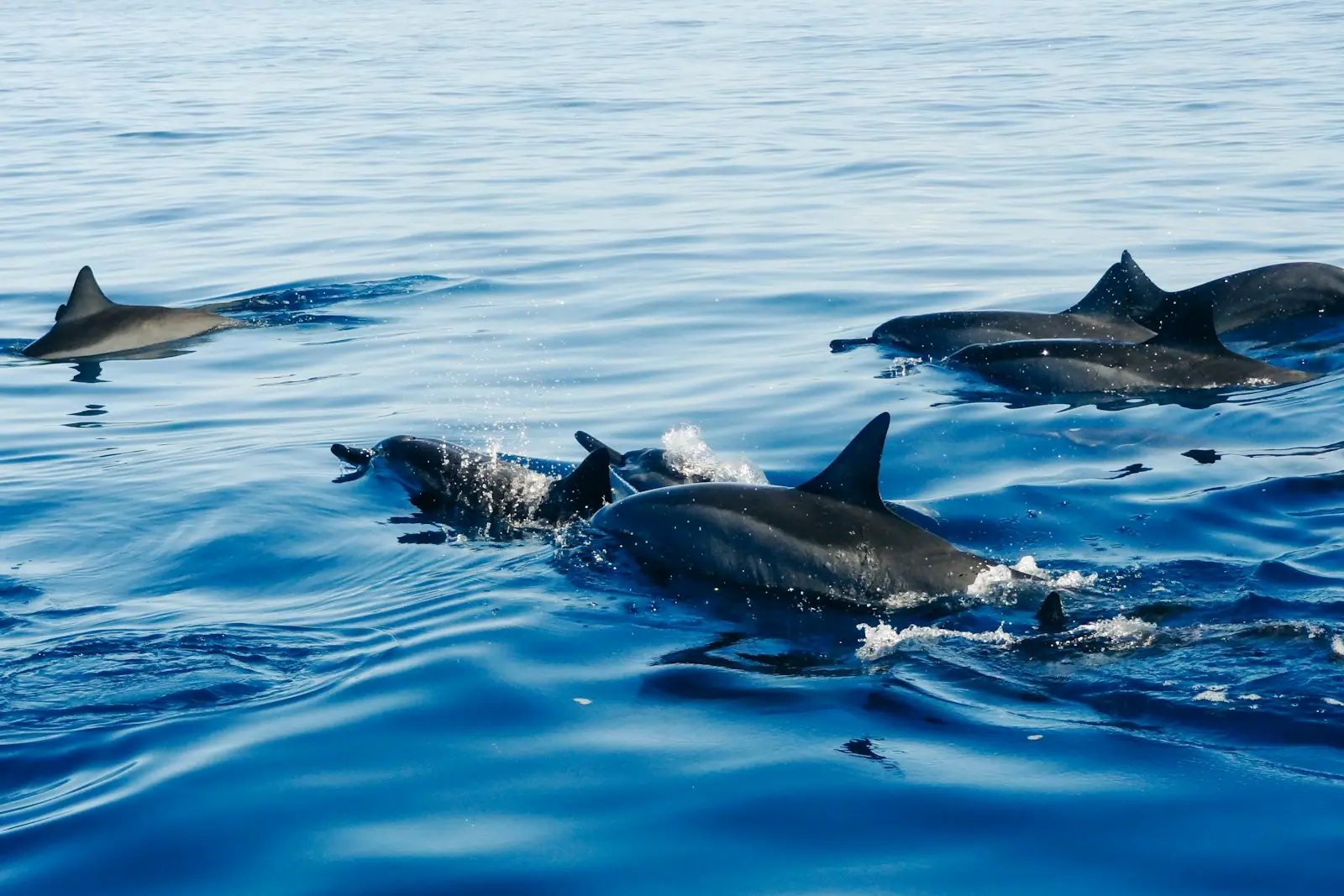
A bottlenose dolphin surfacing in dark green waterUnsplash

Most destinations sell dolphin trips on the promise that dolphins live there. This one can be more precise than that, because somebody counted.

In the summer of 2007 the federal fisheries science centre ran a photographic mark-recapture survey across Choctawhatchee Bay, identifying individual animals by the nicks and scars on their dorsal fins over five weeks of fieldwork. The estimate that came out of it put resident abundance at roughly 180 animals, with a larger figure of a little over 230 once transients moving in and out of the pass were included. Those are not marketing numbers. They are the reason an operator here can be relaxed about your odds without overselling them.

The survey found something more interesting than a headcount. The dolphins using this bay do not behave as one pool. Researchers described distinct groupings: animals concentrated in the central and eastern reaches of the bay toward Freeport and the Walton County shore, a separate set using the western bay and Santa Rosa Sound in front of Fort Walton Beach, and a third working the inlet water around East Pass and westward toward lower Pensacola Bay. In practice that means the fin you watch from the Okaloosa Island bay shore and the fin your boat finds at the jetties may belong to two different communities that rarely mix.

The geography explains why they stay. Choctawhatchee Bay is about 135 square miles of shallow, brackish, seagrass-lined water with a single narrow opening to the Gulf. Everything the bay produces and everything the tide moves has to pass through that one gap, which turns East Pass into a permanent, predictable feeding station. A dolphin does not have to search the open Gulf when the bait comes to it twice a day.

For a visitor, the practical consequences are simple and good. Trips are short, because the animals are close. Sightings are reliable in every month of the year rather than seasonal. And the water you are looking at is flat, shallow and green, so a surfacing animal is visible at a distance that would be hopeless in a swell.

What varies is the trip itself, and that is where booking goes wrong. On this coast the word "dolphin cruise" is attached to at least four different products, from a dedicated ninety-minute bay loop to a sandbar shuttle that keeps an eye out on the way. They cost different money and they are not interchangeable. The rest of this page is about telling them apart, and about behaving decently around animals that spend their whole lives in a body of water the size of a small city.
Our picks

The ones we would book

  • Editor's Pick

    Best dedicated dolphin cruise on the bay

    Why we chose it

    The trip that exists only to find animals beats every combination product for this purpose. Ninety minutes, a captain watching the water rather than a clock, and a route that includes the pass rather than turning at the bridge. Take the first sailing of the day, when the bay is flat and the traffic has not built.

    Dolphin Cruise in Destin FL
    Low Last Minute Supplier Cancellation Rate

    Dolphin Cruise in Destin FL (opens in a new tab)

    Editor's PickFree cancellationInstant confirmation
    791 reviews

    Experience the thrill of dolphin-watching with Hydrojet on an excursion that navigates Crab Island, showcases a scenic cruise of Destin…

    1 hour

    Prices checked

    from $37
  • Best Value

    Best short shared trip for the money

    Why we chose it

    A ninety-minute shared cruise is the cheapest reliable way to get close to a resident bay community, and on a calm morning it delivers nearly everything a longer trip does. Choose a boat with shade and a stated passenger limit over the cheapest headline rate, and expect child fares well below the adult price.

    Destin Dolphin Watching and Sunset Cruise
    Likely to Sell Out

    Destin Dolphin Watching and Sunset Cruise (opens in a new tab)

    Best ValueFree cancellationLikely to sell out
    163 reviews

    Cruise the stunning waters of Destin and witness playful wild dolphins in their natural habitat. This 1.5-hour dolphin cruise offers a…

    1–2 hours

    Prices checked

    from $27
  • Best for Families

    Best boat with children who want to see a fin

    Why we chose it

    Short, shaded, with a rail and a restroom, leaving from the Fort Walton Beach side so the drive does not eat the morning. Ninety minutes is the right length for anyone under about eight. Ask whether the crew hands out anything to look through, because a child with binoculars watches the water instead of the deck.

    Dolphin & Sunset Cruises
    Short term availability

    Dolphin & Sunset Cruises (opens in a new tab)

    Best for FamiliesFree cancellationLikely to sell out
    664 reviews

    The Dolphin Cruises are 1 hour narrated cruises through the Destin Harbor, through the East Pass into the Gulf of Mexico and into the Bay…

    1–2 hours

    Prices checked

    from $39

Three groups of dolphins, and which one you are likely to meet

A dolphin surfacing in open water on a bright dayUnsplash
A dolphin surfacing in open water on a bright day

Bottlenose dolphins in the northern Gulf are usually divided by researchers into coastal stocks that range widely and bay, sound and estuary communities that do not. Choctawhatchee Bay carries one of the latter, and it has been studied closely enough to describe its internal structure.

The work that produced the population estimate also identified separate groupings by where animals were repeatedly photographed. One set concentrated in the central and eastern bay, a long way from any tour dock. A second used the western bay and Santa Rosa Sound, which is the water directly in front of Fort Walton Beach and Okaloosa Island. A third worked the inlet areas, meaning East Pass itself and the coastal water westward.

Two things follow that are worth knowing before you book.

The first is that a trip out of Destin Harbor and a trip out of the Fort Walton Beach side are not sampling the same animals. Both will find dolphins. They are likely to be different individuals from different social groups, which is a genuinely unusual thing to be able to say about a two-hour boat ride.

The second is that these are residents rather than visitors. There is no season. An animal photographed in the sound in 2007 may well still be there, because bay communities of this kind are long-lived and site-faithful. That is also why disturbance matters more here than it would to a passing coastal stock: these animals have nowhere else to go.

Why the pass is the reliable place

If a captain has two hours and needs to find animals, the choke point is where they go.

East Pass is the only way in or out of a bay covering roughly 135 square miles. On every tide change an enormous volume of water moves through a gap a few hundred yards wide, and it carries mullet, menhaden and shrimp with it. The rocks of the jetties add structure on both sides, which holds bait in the eddies rather than letting it stream past. The result is a hunting ground that resets itself twice a day, in exactly the same place, all year.

Dolphins work it accordingly: sitting in the slack water behind the rock, running fish against the jetty wall, riding the standing waves where the ebb meets the incoming swell. It is also where the charter fleet returns and cleans its catch, which produces a second, less wholesome attraction and a real problem discussed further down this page.

The secondary reliable spots are the bridges. The pilings of the Marler Bridge over the pass and the Brooks Bridge over the sound create the same effect at a smaller scale, and boats working a bay loop will usually swing past at least one of them.

None of this makes a sighting a promise, and a captain who promises one is telling you something about the operation rather than about the bay. What it does mean is that a morning trip here starts from a genuinely strong position, and that a boat which stays inside the bridge and never goes near the pass has given up its best card.

What a dolphin trip costs here

What it costs

Bands rather than quotes. Rates move with the season and every dock prices its own way, so check before you book.

  • Shared bay and pass cruises. Commonly around $35 to $70 an adult for ninety minutes to two hours, with children usually well under the adult rate and toddlers often free. This is the majority of the market.
  • Combination trips that pair dolphins with the sandbar or a snorkel stop. Generally $50 to $90, and a better purchase per hour if you actually want the second activity.
  • Guided jet ski tours. Usually $150 to $250 for the machine rather than per person, with two riders permitted on most.
  • Private charters. Several hundred dollars for a half day, and this coast carries an unusually deep private market: more than a fifth of everything bookable here sits above $250.

Where the money goes is worth understanding. A cheap shared cruise on a large deck is a fine way to see dolphins and a poor way to photograph them, because you cannot choose your side of the boat. A private captain buys you position and patience: the ability to shut the engine down and wait twenty minutes for a group that is clearly working toward you, which no scheduled boat can do.

For two people, book shared and take the earliest departure. For a family of six, price the private charter before dismissing it.

The hour, the tide and the month

When to go

Hour. Early. The bay is flat before the sea breeze fills in, the light is low enough to see through the surface rather than off it, and the boat traffic that pushes animals into the margins has not yet arrived. The first departure of the day is a better trip than the same boat at two in the afternoon, and it is usually the same price.

Tide. The pass fishes on moving water. Either side of a tide change is when bait is being carried through and when the animals are most reliably there. Slack water at the top or bottom is the quietest hour. You do not need to plan a holiday around this, but if you are choosing between two departures, pick the one on the run.

Month. There is no dolphin season here, which is the point of a resident community. What changes is everything around them. June through August gives you warm water, calm mornings and the heaviest boat traffic of the year. September and October are the best weeks on this coast for a boat of any kind: warm, quiet, and clear. Winter brings cold fronts every week or two, and between them come glassy grey days with almost nobody on the water and dolphins that are noticeably less shy.

Mothers with young calves are most often reported in the warmer months, which is worth knowing mainly as a reason to keep your distance rather than close it.

Book it

Everything else we track

We could not find tours matching this right now

Nothing came back for dolphin cruise Destin. Operators add and retire experiences constantly, so this list changes week to week. Try a broader category, or come back in a day or two.

The four things sold as a dolphin trip here

How they compare

Read what the boat actually does. These are not the same purchase.

FormatTypical lengthWhat you getWatch for
Dedicated bay and pass cruise1.5–2 hoursA captain whose only job is finding animals, commentary, a steady deckThe best version, and the one to book if dolphins are the point
Sandbar trip with dolphins attached2–3 hoursCrab Island plus a look at the pass on the wayThe dolphins are incidental; the stop is the product
Guided jet ski tour1.5–2 hoursSpeed, spray and a led run through the sound and bayMachines and wild animals are a poor combination in the wrong hands
Private charterHalf day upYour own schedule, the whole bay, time to wait rather than searchThe right call for photographers and for groups of six or more

The dedicated cruise is underrated on this coast, because the sandbar dominates the listings. If you want to watch animals rather than glimpse them, book the boat that exists to do it.

A note on the jet ski option, which is genuinely popular here. A led tour with a guide who idles when animals approach and keeps distance is a decent day out. A group of machines circling a pod is harassment, and it is also illegal. Read reviews for how the guide behaved around wildlife rather than for how fast the ride was.

The problem this particular pass has

Before you book

Every dolphin destination asks you not to feed or chase the animals. Under the Marine Mammal Protection Act both are unlawful, and federal guidance puts the minimum distance at fifty yards. That is the baseline everywhere.

What is specific to this coast is the funnel. Because a narrow pass concentrates the food, it also concentrates everything else: tour boats, private pontoons, personal watercraft, paddlers and a returning charter fleet, all in the same few hundred yards of water where the animals need to hunt. A dolphin working the jetty wall on an ebb tide has no quiet alternative to move to. The crowding here is not occasional; on a July weekend it is constant.

Two consequences follow for anyone not on a crewed boat. If you are on a rented pontoon or a jet ski, the decision to hold off is yours alone, and the fifty yards should be measured generously rather than optimistically. And if you are anywhere near the harbour's fish-cleaning tables, resist the urge to throw scraps over the side. The animals around this pass are already habituated by decades of it, and a habituated dolphin around a working fleet ends up struck by a hull or wrapped in monofilament.

Anyone offering a swim with wild dolphins is selling something that is not legal in Florida waters. Injured, entangled or stranded animals should be reported to the federal stranding network for the region; marina offices on both sides of the pass post the current number.

On the ground

Where to go

Every place below has its own page — hours, parking, what it costs and what to expect when you get there.

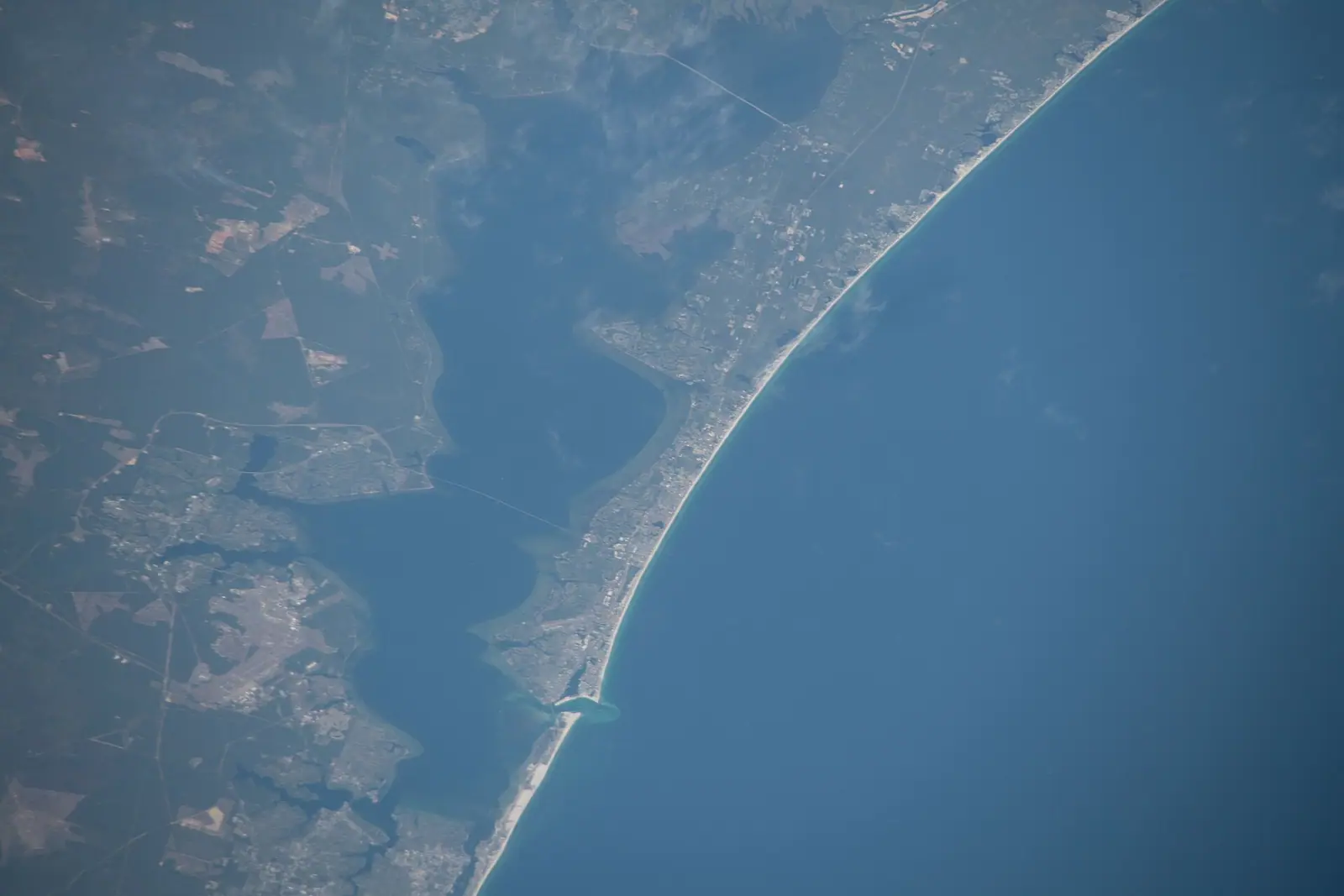
  • An aerial view of a long low bridge crossing shallow green water with a pale sandbar visible beneath the surface
    Water feature

    Choctawhatchee Bay

    Free

    Twenty-seven miles of near-tideless brackish water with one narrow way out to the Gulf, which is why everything on this coast floats on it.

    2–8 hoursFree to be on. The Mid-Bay Bridge is tolled, and boat rental, fuel and launch ramps are separate costs.

    Photograph: Earth Science and Remote Sensing Unit, NASA Johnson Space Center

  • Late light and low cloud over moving water near a narrow channel
    Water feature

    East Pass

    Free

    The only channel between Choctawhatchee Bay and the Gulf, started by four men with shovels in a 1929 flood and never closed since.

    0.5–2 hoursFree. Viewing from the Marler Bridge walkway, Norriego Point and the east jetty costs nothing.

    Photograph: Jacob Weston

  • Sea oats growing on a low dune above a wide pale beach under a broad sky
    Neighbourhood

    Okaloosa Island

    Free

    The county-owned beach strip across the sound from town: three miles of Gulf front, free parking, and no city government at all.

    3–10 hoursFree, with free parking at the county beach accesses and the Boardwalk.

    Photograph: SrA Carlin Leslie

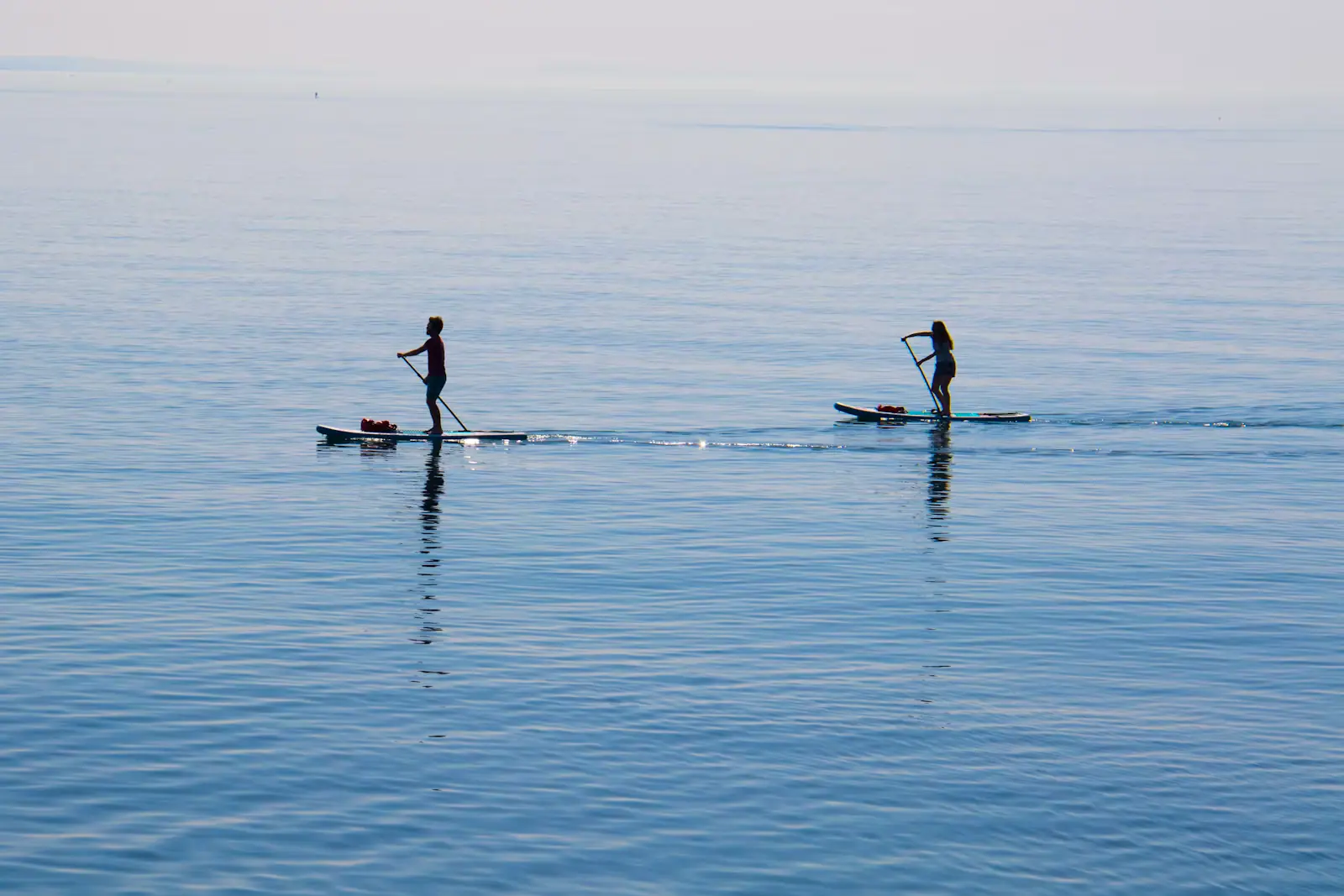
  • Two paddleboarders on a wide sheet of flat, pale, mirror-calm water under a soft sky
    Water feature

    Santa Rosa Sound

    Free

    Thirty-odd miles of waist-deep water between the mainland and the island, with a shipping channel dredged straight down the centre of it.

    1–5 hoursFree. Public access points on both shores cost nothing; equipment hire and boat fuel are separate.

    Photograph: Unsplash

  • Several dolphins surfacing together in calm open water
    Entertainment

    Gulfarium Marine Adventure Park

    One of America's oldest marine parks, open on Okaloosa Island since 1955, with a working sea turtle rehabilitation unit attached.

    2–4 hoursGeneral admission has recently sat around the mid-thirties for adults and mid-twenties for children, with a lower senior rate and under-twos free. Parking is free.

    Photograph: Earth Science and Remote Sensing Unit, Lyndon B. Johnson Space Center

  • Reef fish over shallow rock seen from just below the surface in clear water
    Landmark

    Destin Jetties

    Free

    Two rock walls of Kentucky limestone holding the pass open, and the closest thing this coast has to a reef.

    1–4 hoursFree to reach on foot on the Destin side. Guided snorkel and dive trips from Destin Harbor are priced by the operator.

    Photograph: Unsplash

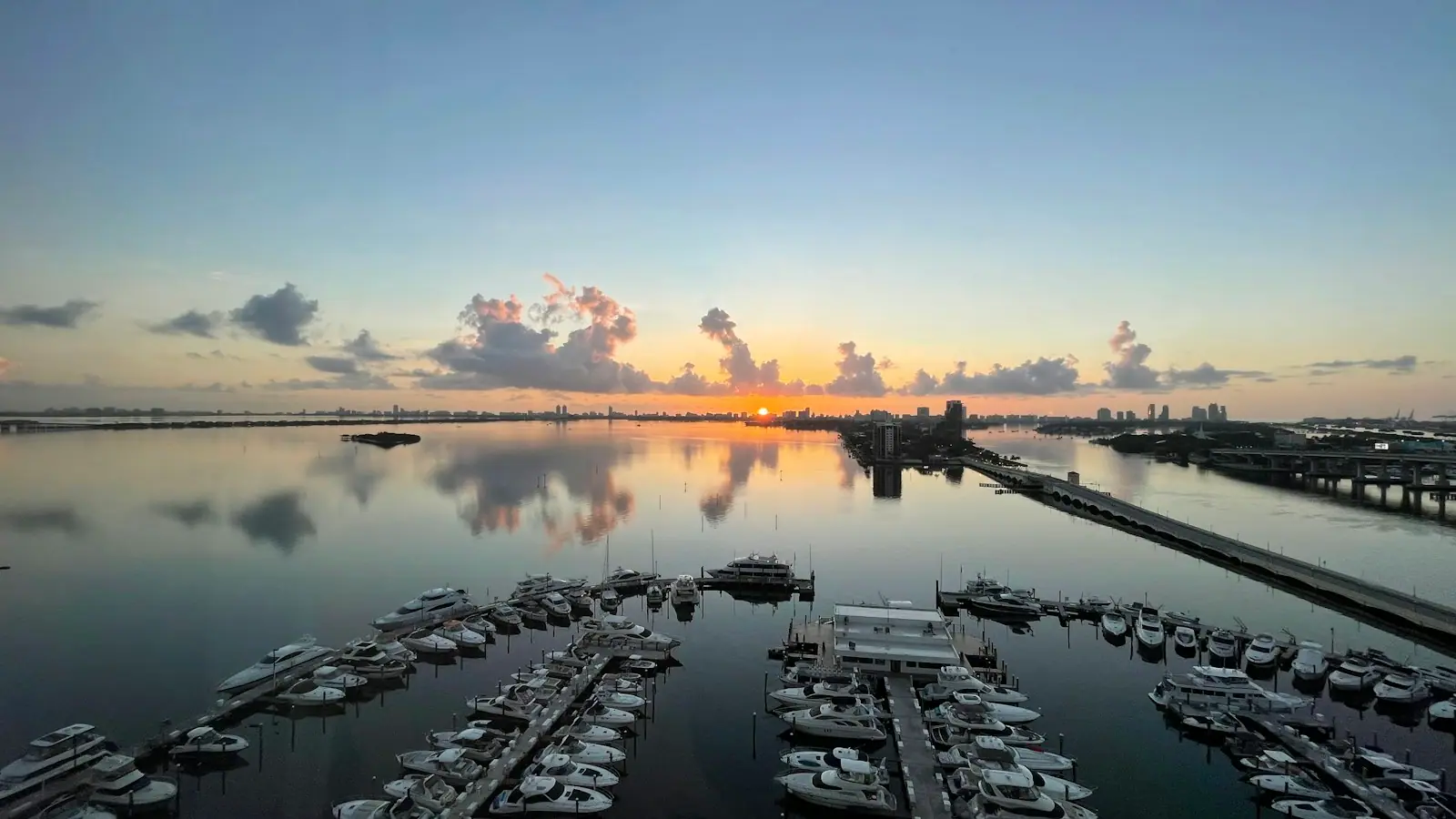
  • Rows of boats moored in a marina basin on flat water at first light
    Marina

    Destin Harbor

    Free

    Half an hour east: the largest charter fishing fleet in the country, most Crab Island departures, and the noise to match.

    1.5–8 hoursFree to walk the harbour and the boardwalk. Charters, rentals and shuttles are priced by operator, and Destin's offshore trips sit well above the regional average.

    Photograph: Wikideas1

Straight answers

Questions people actually ask

Are there dolphins in Fort Walton Beach year-round?

Yes. Choctawhatchee Bay and Santa Rosa Sound hold a resident community rather than a seasonal one, and a federal photo-identification survey of the bay estimated roughly 180 resident animals, with a larger figure once transients through the pass were counted. There is no dolphin season here. What changes through the year is the weather, the boat traffic and how easily you can get out on the water.

Where is the best place to see dolphins near Fort Walton Beach?

East Pass at Destin, because it is the only opening between a very large bay and the Gulf, so bait and therefore dolphins concentrate there on every tide change. The jetty rocks add structure that holds fish in the eddies. Bridge pilings do the same at a smaller scale. The sound in front of Okaloosa Island holds a separate group of animals and is worth watching from the shore.

How much do dolphin tours cost in Fort Walton Beach?

Shared bay and pass cruises commonly run about $35 to $70 an adult for ninety minutes to two hours, and child fares are usually well below that. Combination trips that add the sandbar or a snorkel stop tend to sit between $50 and $90. Private charters are priced for the boat and frequently run several hundred dollars for a half day. Confirm current rates before booking.

What time of day is best for a dolphin tour?

The first departure of the morning. The bay is flat before the afternoon sea breeze builds a chop across it, the low light lets you see into the water rather than off it, and the recreational traffic that pushes animals to the margins has not arrived. If you are choosing between two sailings, take the one on a moving tide rather than at slack water.

Can you swim with dolphins in Fort Walton Beach?

Not with wild ones. Swimming with, feeding or pursuing wild dolphins is prohibited under the Marine Mammal Protection Act, and any listing promising it should be treated as a reason to book elsewhere. Federal guidance asks boaters to stay at least fifty yards off and to take the engine out of gear if animals approach on their own. The Gulfarium on Okaloosa Island runs its own supervised animal programmes separately.

Is a jet ski dolphin tour a good idea?

It can be, with the right guide. Led tours through the sound and bay are popular here and cover real distance, which is a better product than an hour of circles off the beach. The risk is behaviour around animals: a string of machines closing on a pod is harassment and unlawful. Read reviews specifically for how the guide handled wildlife, not for how fast the ride felt.