Three separate places answer to the name you booked. Fort Walton Beach proper is a mainland town of shopping plazas, a small downtown on Santa Rosa Sound and a 12-foot prehistoric mound sitting in the middle of it. Okaloosa Island, where the Gulf beach is, is a strip of barrier island on the far side of the sound, reached by one bridge. And Destin, the name on most of the postcards, is a different city about eight miles east across the water.
Almost every first-time visitor ends up in all three inside 48 hours. Knowing which is which before you book saves you the two expensive mistakes people make here: paying Destin rates for a Fort Walton Beach week, or booking a mainland motel and discovering the beach is a bridge crossing away.
Where to base yourself
| Base | What you get | What you give up | Price feel |
|---|---|---|---|
| Okaloosa Island | Gulf-front condos, county beach parks, the pier, the Gulfarium, a short run to Crab Island by boat | No supermarket within walking distance; one road on and off | Mid |
| Mainland Fort Walton Beach | Cheapest beds on the coast, the museums, the sound-side parks, real grocery stores | You drive or ride to the Gulf every day | Low to mid |
| Destin | Harbour restaurants, the charter fleet, Crab Island fifteen minutes away, the biggest choice of rentals | Peak-season traffic on US 98 that has to be seen; highest rates | High |
| Niceville / Shalimar | Quiet bayou-side towns, bass and bream water, the state park campground | Twenty-five minutes and a toll bridge from the Gulf | Low |
If this is a beach holiday, stay on Okaloosa Island. If it is a boating holiday, weigh the extra Destin rate against the hour of sound you would otherwise motor through twice a day. If it is a budget week, the mainland works and it is not a compromise: it is where the Indian Temple Mound Museum, the science centre and the sound beaches are anyway.
The water is genuinely that colour
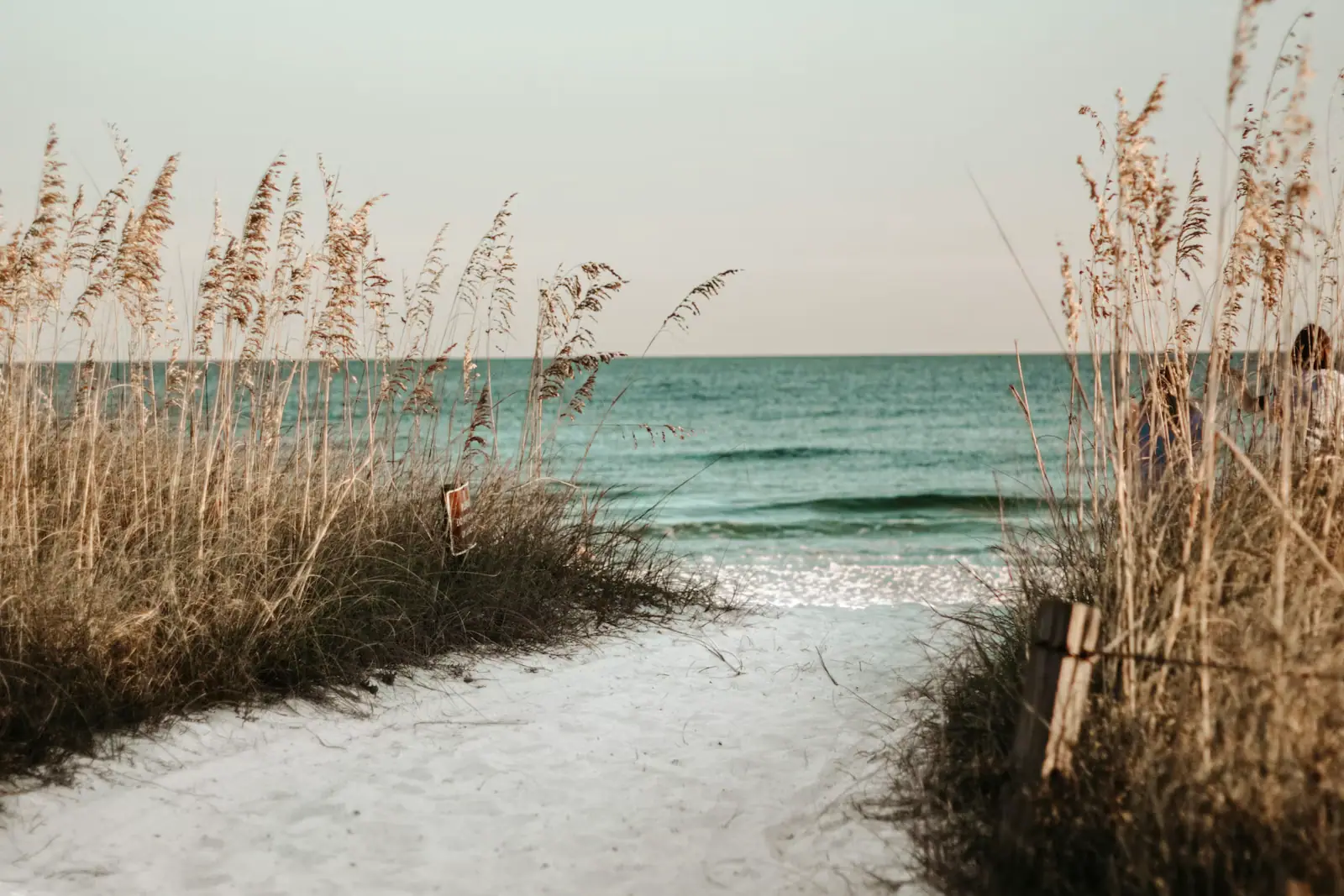
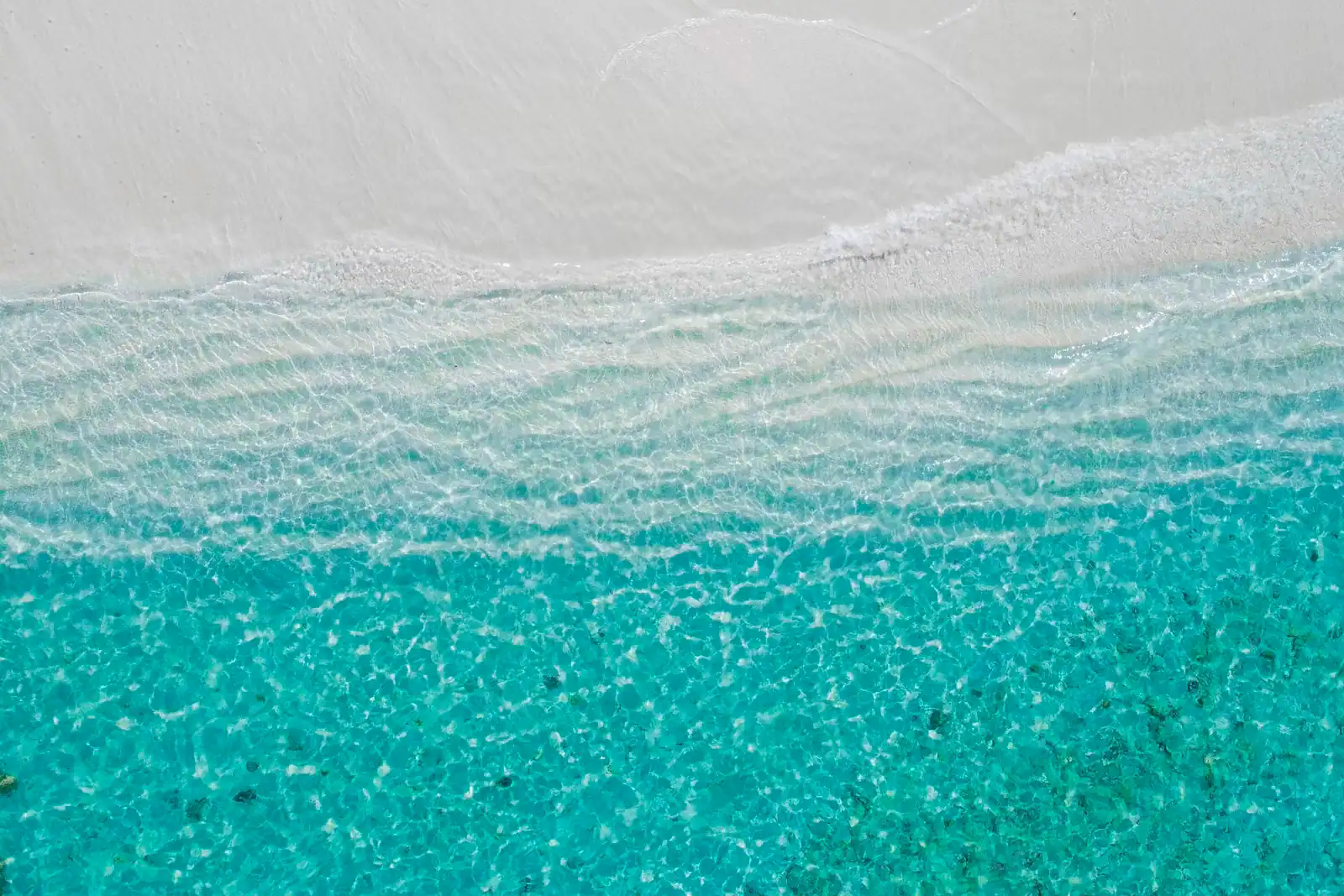
The sand here is 97 to 98 per cent quartz, ground out of the southern Appalachians and carried down to the Gulf by the Apalachicola river system. It is bright, squeaky, and fine enough that wave action keeps it suspended in the shallows rather than letting it settle. Sunlight bounces off that suspended quartz, the yellow comes back up through the blue, and your eye reads green.
That is the whole trick, and it is why the colour holds along this stretch and fades where rivers dump darker sediment. The name "Emerald Coast" is younger than the phenomenon: it was coined in 1983 by a junior high school student who won $50 in a contest for an area slogan.
The military is not background
Eglin Air Force Base occupies something on the order of 464,000 acres (around 724 square miles), which makes it one of the largest military installations anywhere by land area. Hurlburt Field, on the western edge of town, is the headquarters of Air Force Special Operations Command. The commercial airport, Destin–Fort Walton Beach (VPS), is a civilian terminal sitting on Eglin's airfield, so your holiday begins by landing on an active air force base.
Practically, this means three things. You will hear aircraft, and occasionally feel a test. A large share of the people serving your dinner are connected to the bases. And the Air Force Armament Museum, just outside Eglin's gate on Highway 85, is free, needs no base pass, and has an SR-71 parked in it, which is a better wet-weather option than any town this size has a right to.
What people actually come for
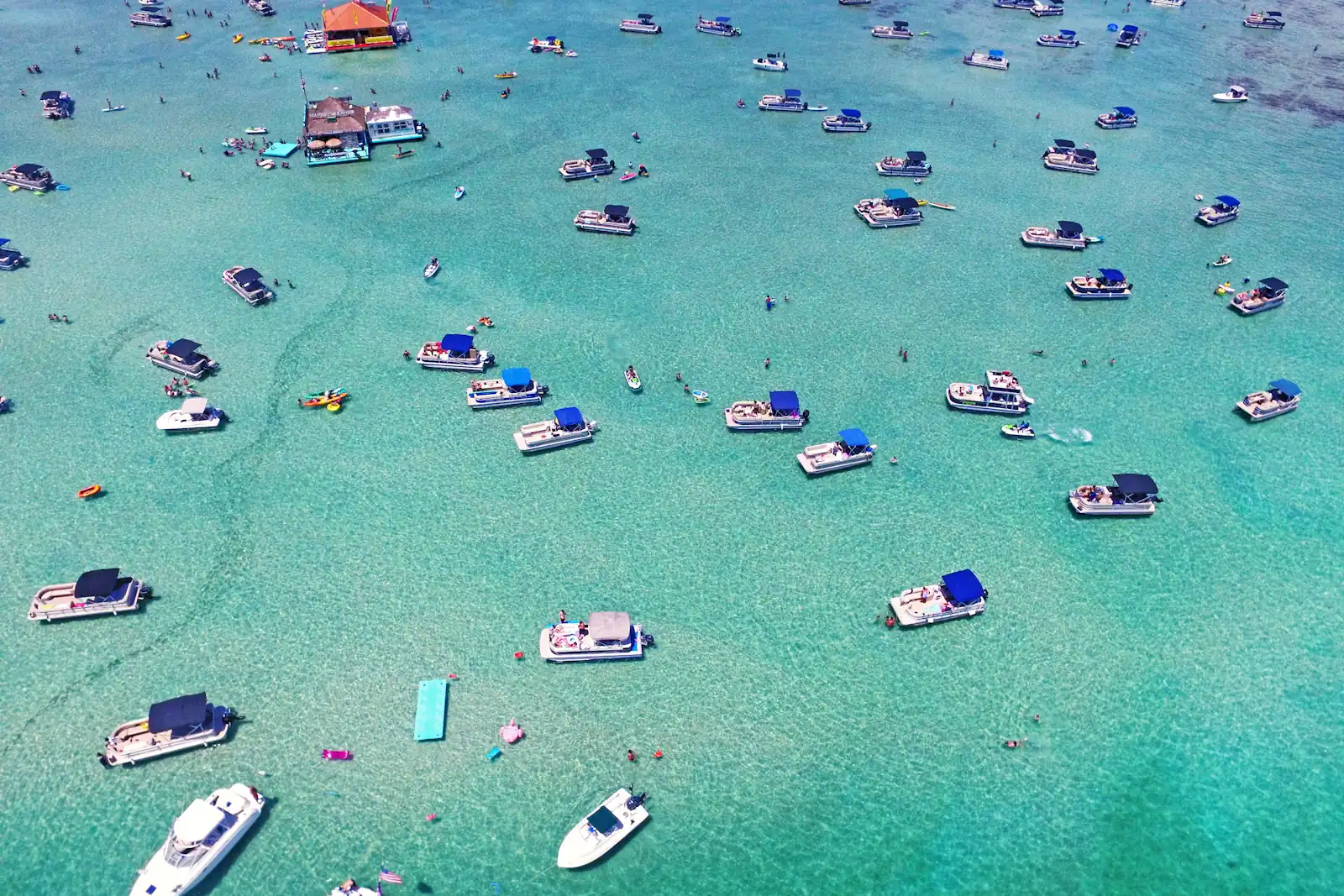
Crab Island. A submerged sandbar in Choctawhatchee Bay, reached only by boat, where the water is waist-deep and several hundred vessels raft up on a summer Saturday. It is the most-searched thing on this coast and it deserves its own day.
The Gulf beaches. John Beasley Park and The Boardwalk are the two main public accesses on Okaloosa Island. Beasley is free to park at and has lifeguards in summer. The Boardwalk puts restaurants and the pier within a few minutes' walk.
The Okaloosa Island Pier. It runs 1,262 feet into the Gulf, close to a quarter of a mile. You can fish it for single-digit dollars, with the Florida licence covered by the pier's own, or pay a couple of dollars to walk out and watch other people fail.
The Gulfarium. Opened in 1955, which makes it one of the oldest marine parks in the country, and its C.A.R.E. Center rehabilitates around a hundred sea turtles a year.
The mound. The Fort Walton temple mound is a National Historic Landmark, designated in 1964, standing about 12 feet high and 233 feet across in the middle of a working downtown. The museum beside it holds over a thousand artefacts. Treat it as an archaeological site rather than a photo stop.
Getting here, and the one road
VPS is the close airport and the easy one. Northwest Florida Beaches (ECP) near Panama City and Pensacola (PNS) are each roughly an hour to ninety minutes away and sometimes cheaper. Note the clock: this end of the Panhandle runs on Central time, an hour behind Orlando, Miami and most of Florida.
Once you are here, US 98 is the artery and very nearly the only one. It carries the traffic of five beach communities through a handful of signals, and the Brooks Bridge (the crossing between the mainland and Okaloosa Island, open since 1966) is being replaced by two new six-lane spans in a project that broke ground in 2023 and was scheduled across several years. Lane patterns and approach roads have already shifted more than once. Check the day's arrangement rather than last year's map, and add time to any trip that crosses the sound on a July afternoon.
An honest first three days
Day one, walk on the Gulf and read the flags. Day two, get on the water: Crab Island if the wind is light, a dolphin run through East Pass if it is not. Day three, do the indoor half: the mound and its museum, the Armament Museum, then Destin Harbor in the late afternoon when the charter boats come in and the fish get hung on the boards.
That leaves the pier, the sound-side parks and the day trip to Henderson Beach State Park (which is in Destin, not here, whatever the brochure implies) for the rest of the week.
What it costs, roughly
A summer week in a Gulf-front Okaloosa Island condo sits well above the same week on the mainland, and both sit below Destin. A half-day pontoon typically runs in the mid hundreds, a full day higher, and a shuttle seat to Crab Island is a fraction of that. The beach parks are free to park at. The museums are the cheap part of the week. Prices move every season, so treat all of that as a shape rather than a quote.
The flags are law, not advice
Okaloosa County flies a coloured flag system on its guarded beaches: green for low hazard, yellow for moderate surf or currents, red for high hazard, purple for dangerous marine life, and two red flags flown together meaning the water is closed.
Double red is the one to understand before you arrive. It is not a strong suggestion. Under the county's beach ordinance the Gulf is legally shut when those flags are up, and going in can bring a fine. Lifeguards on this coast are trained to the United States Lifesaving Association's open-water standard and they change the flags through the day as conditions shift, so check the pole each time you come down, not once on the first morning.
The hazard here is rarely the wave height. It is the rip current running out through a gap in the offshore bar on a day that looks calm from a balcony. The escape from one is sideways, not backwards: move along the shoreline, across the pull, and only turn for the sand once it lets go of you. Trying to power straight in is what exhausts people.
Last updated
Opening hours, ordinances and prices move with the season. We re-check this guide rather than rewrite it, and the date above is the last time someone did. How we research and correct.