Skip to content
Search
Menu

We earn a commission if you book through this link. You pay the same price.

Things to Do

Snorkeling the Emerald Coast

Last updated

Snorkeling in Fort Walton Beach has no coral and does not need it. The Okaloosa Island snorkel reefs, the Destin jetties, what you see and how clear it gets.

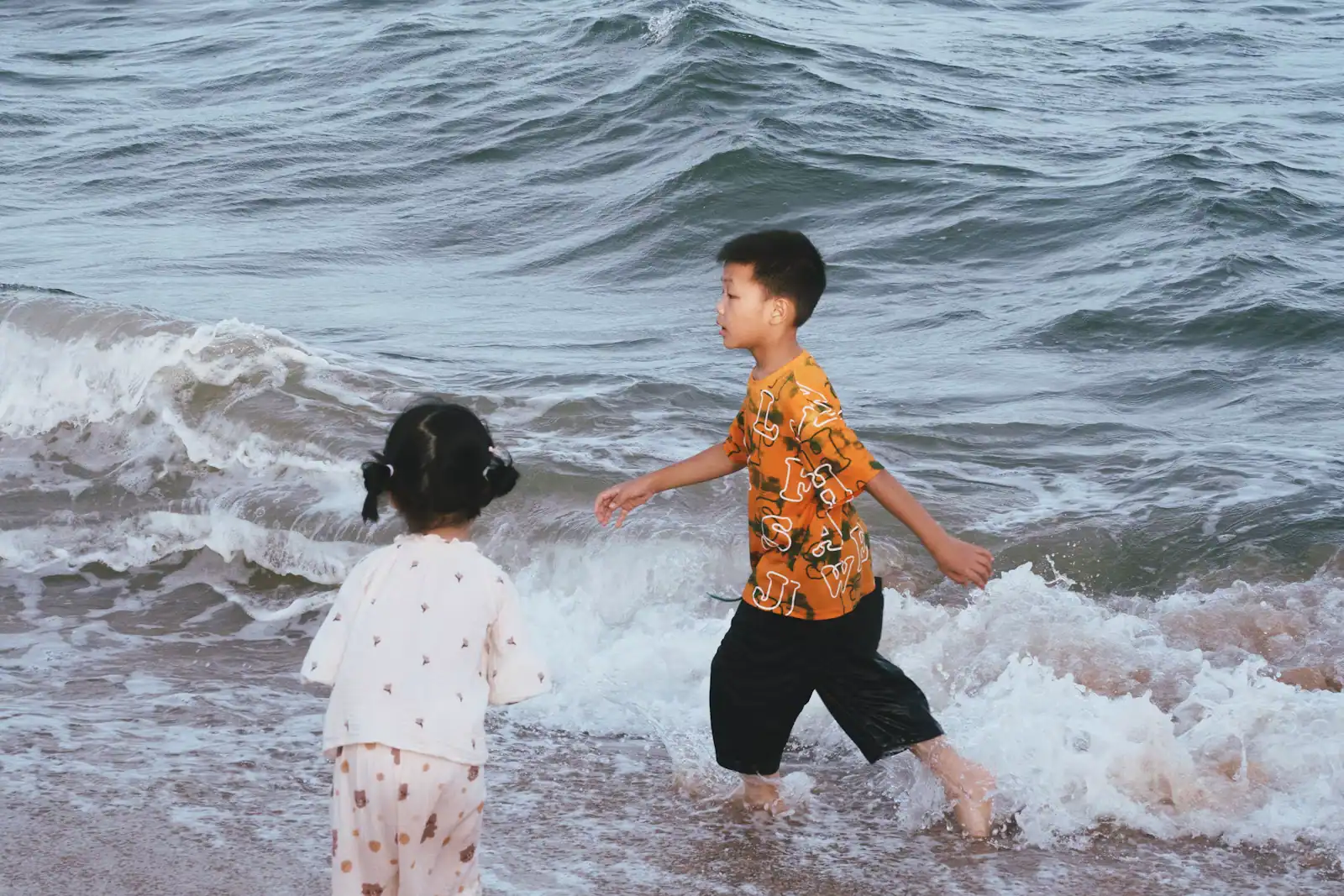
Children snorkelling in shallow, clear water close to shoreUnsplash

Set your expectations correctly and this is one of the better surprises on the Florida panhandle. Set them wrong and you will spend an afternoon swimming over empty sand wondering what everybody is talking about.

There is no coral reef here. The northern Gulf is too cool in winter for reef-building corals, and the seabed off Okaloosa Island is exactly what it looks like from the beach: fine white quartz sand, sloping away very gently, featureless for miles. A snorkeller dropped at random into this water sees nothing at all.

Everything worth swimming over was therefore put there deliberately, and that is the genuinely interesting thing about snorkelling this coast. Okaloosa County runs one of the most active artificial reef programmes in the United States, with well over five hundred public reef sites built since the 1970s and a large share of them deployed in the last several years. Most are out in deep water for divers and anglers. A specific subset was designed for people with a mask and a pair of fins: concrete modules dropped a few hundred feet off the sand in something like twelve to twenty feet of water, directly off the public beach accesses on Okaloosa Island, close enough that a reasonable swimmer can reach them without a boat.

The other two options are older and accidental. The jetties that hold East Pass open were built from limestone barged down from Kentucky, and eighty years of Gulf water has turned that imported rock into the densest concentration of fish life you can swim to on this coast. And the Okaloosa Island Pier stands on pilings that do the same job in miniature, which is why the water under it is never empty and why you have to think carefully about the fishing lines above it.

Water clarity is the variable that decides whether any of this works, and unlike a coral destination it is almost entirely about wind rather than season. A day or two of light northerly air and the Gulf here goes to the kind of clear, pale green that gave the coast its name, visibility comfortably past thirty feet. A steady southerly pushes swell onto a shallow sand shelf, stirs it, and drops that to a murky arm's length within hours. The forecast tells you more than the calendar does, and the second half of this page is about reading it.

Our picks

The ones we would book

  • Editor's Pick

    Best guided snorkel trip to the nearshore structure

    Why we chose it

    A boat that runs to the reefs and the pass with gear included is the fastest way to understand why this coast snorkels at all. Look for a trip of two hours or more with a crew member in the water, and book the morning departure, when the Gulf is flat and the sand has settled overnight.

    Top Shelf Tikis Crab Island Adventure 3 hr
    Low Supplier Cancellation Rate

    Top Shelf Tikis Crab Island Adventure 3 hr (opens in a new tab)

    Editor's PickFree cancellationInstant confirmation
    304 reviews

    Set sail on a lively 3-hour Premium Tiki Boat trip to Crab Island in Destin, Florida, where adventure and relaxation await. This…

    3 hours

    Prices checked

    from $79
  • Best for Beginners

    Best first snorkel for someone who has never done it

    Why we chose it

    The thing that makes or breaks a first attempt is having someone in the water beside you and a flotation belt you are not embarrassed to wear. Choose a shallow, sheltered trip with a small group and supplied gear over anything advertised as an adventure. Twelve feet of clear water is plenty for a first look.

  • Best Value

    Best short trip with gear included

    Why we chose it

    Mask, fins and a flotation belt for a family of four costs real money to buy and nothing to borrow. A two-hour shared trip with equipment supplied is usually cheaper than kitting everyone out, and you find out whether anybody actually enjoys it before you spend anything. Confirm that child sizes are carried.

    Destin Dolphin Cruise
    Short term availability

    Destin Dolphin Cruise (opens in a new tab)

    Best ValueFree cancellationInstant confirmation
    592 reviews

    Our product is unique because of how easy it is to walk around and see over the side of the boat. Our boat is stable open air with a…

    1–2 hours

    Prices checked

    from $27
  • Best for Families

    Best trip with children who can swim but are not strong

    Why we chose it

    What matters is a boat that stays in shallow water, a ladder a tired eight-year-old can climb, and crew who count heads. Ask where the operator actually anchors rather than what the listing calls the destination, because "reef" covers everything from twelve feet to forty here.

    SunVenture I and SunVenture II at Crab Island in Destin, FL
    Seasonal

    4 Hour Destin Harbor Crab Island Excursion (opens in a new tab)

    Best for FamiliesFree cancellationLikely to sell out
    472 reviews

    Crab Island is a summer tradition for locals and visitors alike as the ultimate way to celebrate on the water but you can only get there…

    4 hours

    Prices checked

    from $79
  • Best Private Tour

    Best private boat for a group that wants the pass

    Why we chose it

    The jetties and the nearshore wrecks reward a captain who can pick the slack-water window and move if the visibility is poor at the first stop. Shared trips cannot do that. From about six people the per-head cost stops looking unreasonable, and this coast carries plenty of private inventory.

    Take in a view only found on the Emerald Coast!
    Low Last Minute Supplier Cancellation Rate

    Crab Island Pontoon Boat Rentals (opens in a new tab)

    Best Private TourFree cancellationPrivate tour
    322 reviews

    Want the easiest way to get to Crab Island without dealing with traffic, crowds, or complicated rentals? Your Crab Island adventure starts…

    2 hours

    Prices checked

    from $199

Why everything here was put in the water on purpose

The artificial reef programme is the reason this coast has any snorkelling at all, and it is worth understanding before you swim over one.

The seabed here is quartz sand, mobile and almost entirely without structure. Fish need something to hide behind, feed on and spawn around, so Okaloosa County has spent decades putting structure down: concrete pyramids and disc modules, culvert pipe, bridge rubble, tugboats, barges and, further out, larger vessels sunk deliberately. Counts in the region of five hundred and fifty to six hundred public sites are commonly cited, with a very large share placed since the end of the 2010s.

Almost all of that is diving and fishing depth. The snorkelling subset is a deliberate design decision: modules placed within swimming distance of specific public beach accesses on Okaloosa Island, in water shallow enough that a mask shows you the bottom clearly on a calm day.

This has two implications a visitor should hold onto. The first is that a reef here is a small, discrete thing rather than a landscape. You swim out, you find a cluster of concrete perhaps the size of a few cars, and everything lives on it. Miss it by fifty yards and you see sand. Take a bearing from the beach before you go in.

The second is that colonisation takes time. A module dropped last year is bare grey concrete with a few fish around it. One dropped fifteen years ago is furred with growth and busy. Both are marked as snorkel reefs.

Swimming out to the reefs off Okaloosa Island

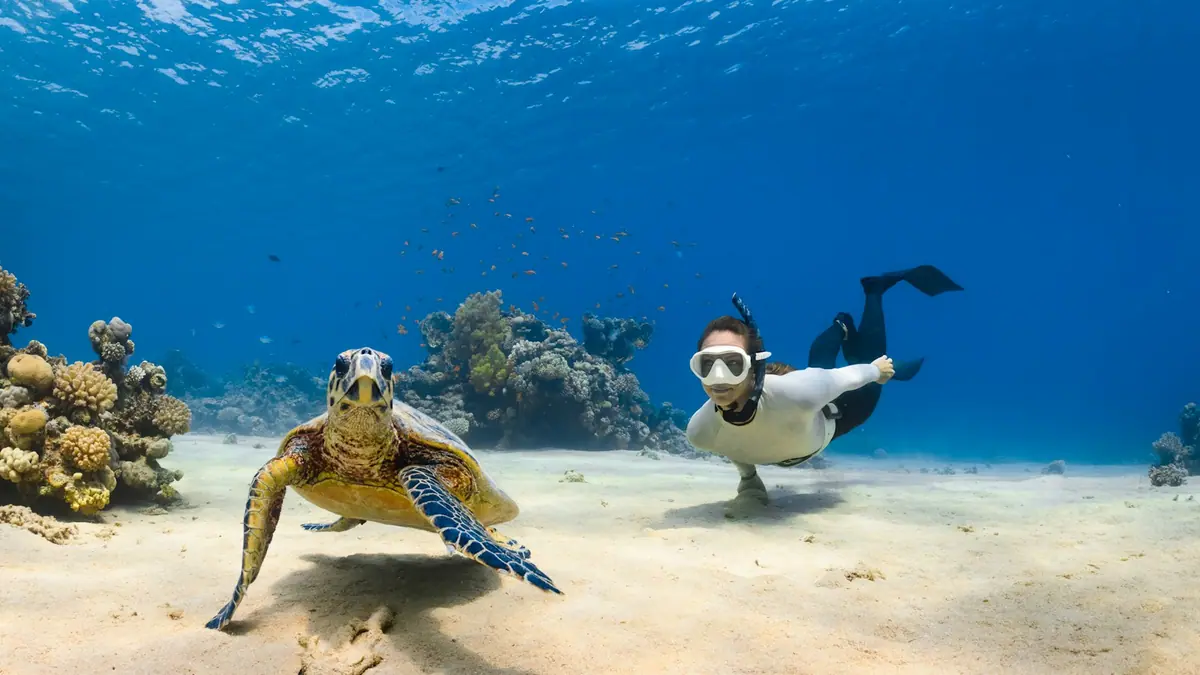
A sea turtle swimming in clear water a short distance from a snorkellerUnsplash
A sea turtle swimming in clear water a short distance from a snorkeller

Local tips

The nearshore snorkel modules sit off the county beach accesses on Okaloosa Island, with reefs reported off accesses 2, 4 and 6 and the Access 4 cluster the closest to shore. Access 4 also has a dune walkover and restrooms, which is why it is the sensible place to start.

  • Distance. Accounts vary between roughly five hundred feet and a couple of hundred yards from the waterline, which in practice means a swim of several minutes for a confident adult and a genuinely long way for a child or a nervous swimmer. Look at the water before you commit.
  • Depth. Somewhere around twelve to twenty feet over the modules. You are floating well above them rather than touching, so this is looking-down snorkelling, not poking-about snorkelling.
  • Take flotation. A pool noodle, a belt or a small tow float. It is not about swimming ability; it is about being visible from a boat and being able to stop and rest without treading water over your head.
  • Fins matter here. There is usually a gentle longshore drift, and getting back to the spot you left the beach from is much easier with them.
  • Check the flag first. Okaloosa County flies green, yellow, red, double red and purple. On a red day the swim out is a bad idea regardless of how it looks. On a double red the water is closed outright.
  • Go in the morning. The Gulf is flattest before the sea breeze fills in, which is the same reason every boat on this coast leaves early.

Reading clarity before you drive to the beach

When to go

Clarity here is a wind story, and it is predictable enough to plan around a day or two ahead.

Northerly and north-easterly air blows off the land, flattens the Gulf and lets the sand settle. Twenty-four hours of it and the water goes clear and pale. These are your good days, and they cluster in spring and autumn between fronts.

Southerly and south-westerly wind pushes swell directly onto a shallow shelf with nothing to break it. The surf churns the bottom, the quartz stays in suspension and visibility collapses. A strong southerly for two days will write off the snorkelling even if the sky is perfect.

After a storm allow a full day, sometimes two, for the water to settle. This matters most in summer, when afternoon thunderstorms are routine.

Season affects comfort more than clarity. Gulf water here is in the low eighties Fahrenheit through midsummer and drops into the sixties in late winter, so from about December to March you want a shorty wetsuit even on a clear day. The very clearest water many locals report comes in those cold months, when there is less biological material in it and fewer people stirring the bottom.

Check the flag before you leave, and remember that the flags are about surf and rip risk, not about visibility. A green flag on a stirred day means safe and murky.

Book it

Everything else we track

Some links below go to Viator, our booking partner. We earn a commission on bookings made through them — at no extra cost to you, and with no influence on what we recommend.

Sharing, or having it to yourselves

Most of what is bookable here sells two ways, and the cheaper one is not always the cheaper one. A shared departure is priced per person; a private booking is priced for the party, so the arithmetic flips somewhere around four to six people — and it is the only version where you pick the time. Check the party size each listing actually covers before you decide.

  • Book a seat

    A shared departure, priced per person. The cheapest way to do this for one or two people.

    SunVenture Cruises departing from the Destin Harbor
    Eco Tours

    Destin Harbor Sunset Eco Dolphin Cruise (opens in a new tab)

    Free cancellationLikely to sell out
    335 reviews

    Your Sunset Eco-Dolphin Cruise begins with a leisure cruise into the majestic sunset from our Destin Harbor location. There is simply…

    1–2 hours

    Prices checked

    from $35
  • Book the whole thing

    Priced for the party rather than the seat, and you choose the departure time.

The jetties, and the line nobody draws for you

Before you book

The rock walls either side of East Pass are the best snorkelling on this coast and the place where people most often get themselves into trouble. Both statements are true at once and the second one is rarely printed.

What makes them good: eighty years of imported Kentucky limestone standing in moving, food-rich water has produced a vertical wall of life, and the shallow end close to the sand is genuinely gentle, which is why families with young children snorkel there.

What makes them dangerous: the pass beside them is the only drain for a bay of roughly 135 square miles. On a running tide the water alongside the rocks moves faster than you can swim against, and it is going out to the Gulf. The transition from calm shallow water to serious current is not gradual and is not marked.

The practical rule is to stay on the beach side of the rocks in the shallow water, at slack tide or near it, and never to swim out along the wall toward the channel. If you can see standing waves or a visible seam where the pass water meets the Gulf, the answer for the day is no. Charter boats and private hulls come through that gap continuously, and a snorkeller in the channel is not visible from a flying bridge.

Wear a bright cap or tow a float. Shoes help getting in and out over the rock. And watch for fishing lines: people fish the jetties from above, and a hook in a wetsuit is the most common injury here.

What you will actually see

How they compare

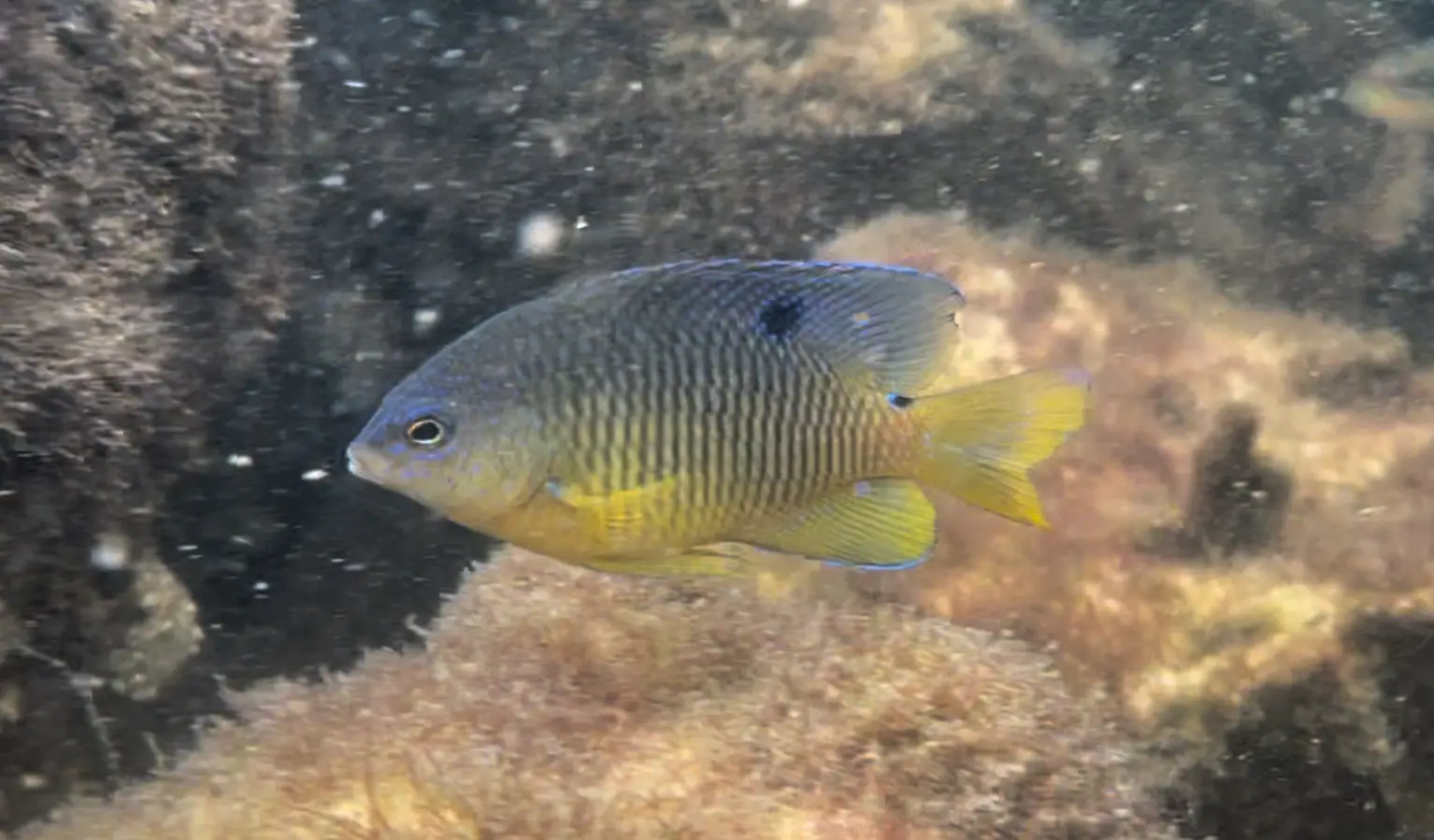
Not parrotfish and staghorn. Northern Gulf structure life, which is less colourful and considerably more interesting than visitors expect.

WhatWhere you find itHow often
SheepsheadJetty rock and pier pilings, grazing barnacles with human-looking teethConstant
Atlantic spadefishCircling the reef modules in loose schoolsVery common
Pinfish, pigfish and small snapperAround every piece of structureConstant
Flounder and stingraysFlat sand between the reef and the beach, half buriedCommon if you look
Blennies and gobiesIn the holes of the concrete modulesCommon, and worth hovering for
Sea turtlesAnywhere, but most often near the pier and the jettiesOccasional, and a good day
OctopusJetty rock, usually only spotted by somebody moving slowlyUncommon
JellyfishOpen water, mostly late summerSeasonal, watch the purple flag

Two notes on realism. There is no guarantee on any given swim; on a stirred-up day you will see the inside of the water and nothing else. And the reef modules further from shore hold noticeably more life than the ones closest in, which is the usual trade between effort and reward.

Lionfish are present in the northern Gulf as an invasive species and are occasionally seen on deeper structure. They are handled by trained divers, not by snorkellers.

From the beach, or from a boat

How they compare

Both work here, and they buy different things.

From the beach costs nothing beyond a mask, and it is the right answer for a family staying on Okaloosa Island. You go when the water looks right rather than when a boat is scheduled, you can abandon the plan in five minutes if it is murky, and the walkovers at the main accesses have parking and restrooms. The limits are distance and confidence: the modules are a real swim out, and there is nobody watching you.

From a boat buys structure you cannot reach. Operators run to nearshore reefs, wreck sites and the pass, supply mask, fins and flotation, and put a crew member in the water with nervous swimmers. For anyone who has not snorkelled before, that last point is worth the fare on its own. Trips commonly run two to three hours and sit in the $50 to $90 band per adult, though rates move with the season.

A third option deserves a mention because this coast does it well: paddle out. A kayak or paddleboard from the beach lets you park over a reef, tie off to nothing, slip in and have a floating base to climb back onto. Do it on a calm morning only, and only with something tethering the board to you.

Whichever you choose, take reef-safe sun cream and a long-sleeved rash vest instead of covering your back in lotion. You are face-down under a Florida sun for an hour.

On the ground

Where to go

Every place below has its own page — hours, parking, what it costs and what to expect when you get there.

  • Late light and low cloud over moving water near a narrow channel
    Water feature

    East Pass

    Free

    The only channel between Choctawhatchee Bay and the Gulf, started by four men with shovels in a 1929 flood and never closed since.

    0.5–2 hoursFree. Viewing from the Marler Bridge walkway, Norriego Point and the east jetty costs nothing.

    Photograph: Jacob Weston

  • Sea oats growing on a low dune above a wide pale beach under a broad sky
    Neighbourhood

    Okaloosa Island

    Free

    The county-owned beach strip across the sound from town: three miles of Gulf front, free parking, and no city government at all.

    3–10 hoursFree, with free parking at the county beach accesses and the Boardwalk.

    Photograph: SrA Carlin Leslie

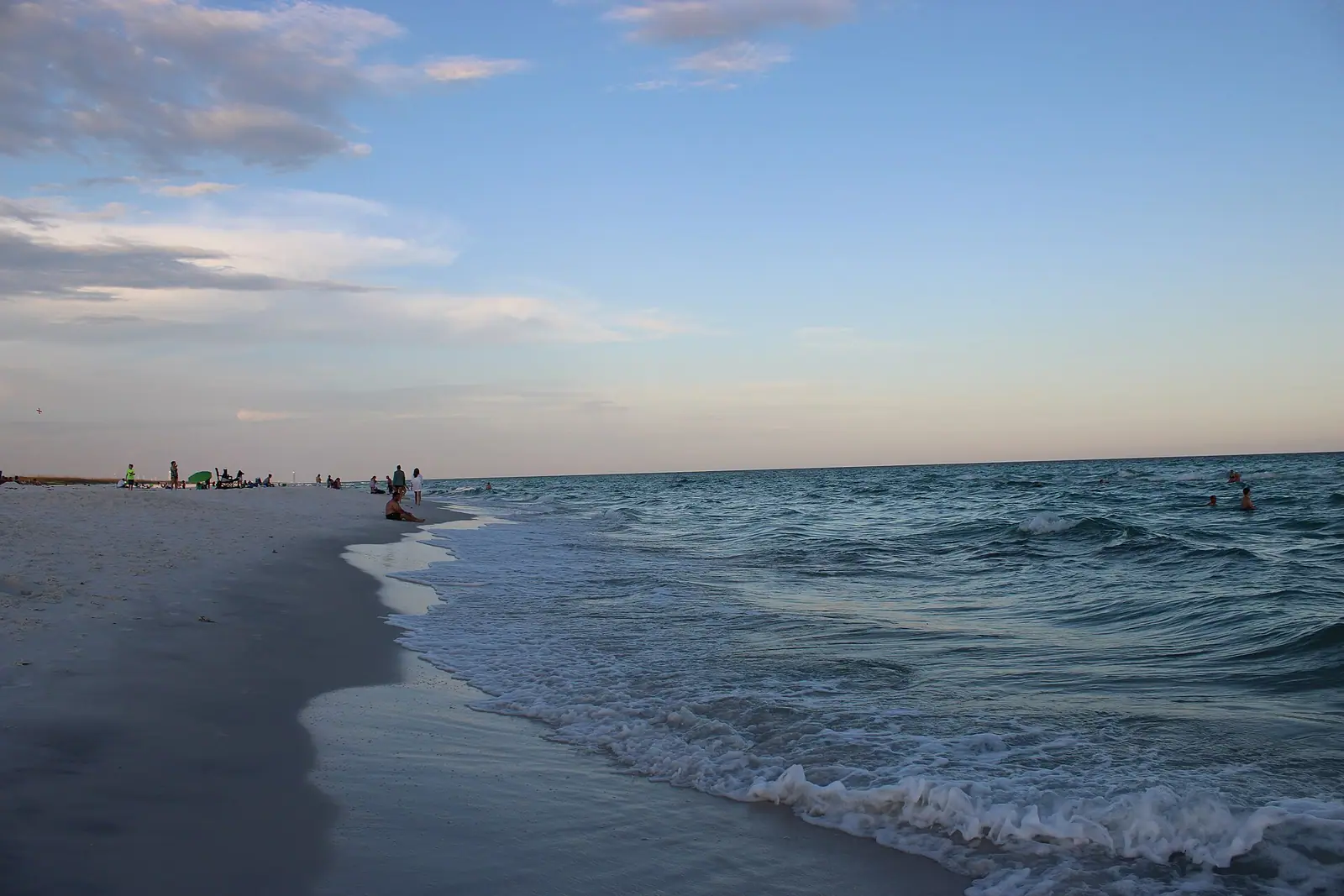
  • Low waves breaking along a wide, flat stretch of beach in late evening light
    Beach

    John C. Beasley Park

    Free

    The county's fullest free beach access — pavilions, showers, seasonal lifeguards — and the beach Black residents were once confined to.

    2–6 hoursFree, including around 200 free parking spaces.

    Photograph: Unsplash

  • People walking out along a long timber pier over clear green water towards open sea
    Beach

    Navarre Beach

    Free

    Four miles of low-rise beach hemmed in by federal land, with the longest fishing pier in Florida sticking out of the middle.

    3–8 hoursThe beach is free. The fishing pier charges around a dollar for a daily walk-on pass and single figures to fish.

    Photograph: Jesselikeswx

  • A palm-lined pedestrian street with low shopfronts and cafe tables set out along it
    Entertainment

    The Boardwalk on Okaloosa Island

    Free

    A county beach access with restaurants, shops and a playground attached — the one spot on the island where a day needs no planning.

    1.5–5 hoursFree to enter, with free parking. Food, shops and the adjoining pier are paid separately.

    Photograph: Earth Science and Remote Sensing Unit, Lyndon B. Johnson Space Center

  • Reef fish over shallow rock seen from just below the surface in clear water
    Landmark

    Destin Jetties

    Free

    Two rock walls of Kentucky limestone holding the pass open, and the closest thing this coast has to a reef.

    1–4 hoursFree to reach on foot on the Destin side. Guided snorkel and dive trips from Destin Harbor are priced by the operator.

    Photograph: Unsplash

  • Seabirds crossing low over breaking surf as the sun comes up over the water
    Landmark

    Okaloosa Island Pier

    A quarter mile of concrete over the Gulf, rebuilt after Hurricane Opal, with a separate cheaper fee if you only want to walk it.

    1–4 hoursTwo tickets: a daily fishing fee recently around eight dollars for an adult with a lower senior rate, and a cheaper sightseeing fee for walking out without a rod.

    Photograph: Earth Science and Remote Sensing Unit, Lyndon B. Johnson Space Center

Straight answers

Questions people actually ask

Is there good snorkeling in Fort Walton Beach?

Yes, but not the kind people picture. There is no coral on this coast, so everything worth swimming over is structure that was put in the water: county-built artificial reef modules a few hundred feet off the Okaloosa Island beach accesses, the imported limestone jetties at East Pass, and the pilings under the Okaloosa Island Pier. On a clear morning all three are genuinely good. On a stirred-up day none of them are.

Where can you snorkel from the beach on Okaloosa Island?

Off the county beach accesses that have nearshore snorkel reefs, with modules reported off accesses 2, 4 and 6. The cluster at Access 4 is closest to shore and that access has a dune walkover and restrooms, which makes it the easiest starting point. The swim out is several minutes for a confident adult, so take flotation and check the beach flag before you go in.

How deep are the snorkel reefs off Fort Walton Beach?

Roughly twelve to twenty feet over the modules, with reported distances from shore ranging between about five hundred feet and a couple of hundred yards. You are floating above them rather than swimming among them, so a mask and a calm surface matter more than diving ability. On a day with any chop the bottom disappears, which is why clarity governs everything here.

When is the water clearest on the Emerald Coast?

After a day or two of northerly wind, which blows off the land, flattens the Gulf and lets the suspended quartz settle. Southerly and south-westerly wind does the opposite, pushing swell onto a shallow sand shelf and stirring it up within hours. Spring and autumn between fronts give the best runs. Many locals rate the clearest water of all in the cold months, when a wetsuit is needed.

Is it safe to snorkel at the Destin jetties?

In the shallow water on the beach side, near slack tide, with care, yes, and families do it constantly. Along the wall toward the channel, no. East Pass is the only drain for a very large bay and the current there runs faster than anyone can swim against, straight out to the Gulf. Add continuous boat traffic and anglers casting from the rocks. Stay shallow, wear something bright, and skip it on a running tide.

What will I see snorkeling in Fort Walton Beach?

Sheepshead grazing the rock, schools of Atlantic spadefish circling the reef modules, pinfish and small snapper around every piece of structure, flounder and stingrays half buried in the sand between, and blennies looking out of holes in the concrete. Sea turtles turn up near the pier and the jetties often enough to be worth hoping for. Late summer brings jellyfish, which is what the purple flag means.