A visitor works this out somewhere around the second afternoon, usually when something overhead rearranges the air. This is not a beach town with a base nearby. It is a military town with a beach attached, and the proportions have been that way since the Second World War.
Eglin Air Force Base covers roughly 464,000 acres (about 724 square miles), which puts it among the largest military installations anywhere by land area, with a very large block of overwater test airspace beyond it. Hurlburt Field, on the town's western edge, is the headquarters of Air Force Special Operations Command and home of the 1st Special Operations Wing. The commercial airport you fly into, Destin–Fort Walton Beach (VPS), is a civilian terminal on Eglin's own airfield.
The name came before the base
Camp Walton was a small Confederate post established in 1861 to watch Santa Rosa Sound, named for Colonel George Walton, once Secretary of the Florida Territory and son of a signer of the Declaration of Independence. There was never much of a fort.
The settlement changed its name to Fort Walton in 1932, and it was a marketing decision: a fort sounded more substantial than a camp and might attract settlers and visitors. "Beach" was added on 15 June 1953, once it was clear what the town was going to sell. The tourist corridor along US 98 got its own invented name around the same time: a local journalist coined "Miracle Strip" in 1952, and motel operators from Pensacola to Panama City formally adopted it in 1956.
So the two things this town is known for (the military and the beach economy) were both named into existence within about twenty years of each other.
The Doolittle Raiders learned to fly off a carrier here
In early 1942, the crews who would bomb Tokyo from the deck of the USS Hornet came to Eglin Field to train. Most arrived on 1 March, were housed in isolated barracks, confined to base and ordered to say nothing about what they were doing.
The problem they had to solve was specific: getting a fully loaded B-25 Mitchell (around 31,000 pounds of aircraft, crew, fuel and bombs) off the ground from a standing start in under 500 feet. Navy personnel painted carrier-deck distances onto Eglin's runways and the crews practised against them, along with low-altitude flying, navigation and precision bombing.
Three weeks of that, on auxiliary fields cut into the pine flatwoods north of a town that had a few hundred residents. It is the single most consequential thing that has ever happened in Okaloosa County and there is no monument you can drive to on the main road, which is quite typical of this place.
What you can actually visit
| Site | Access | Cost | Time |
|---|---|---|---|
| Air Force Armament Museum | Outside Eglin's gate on Highway 85, no base pass | Free | 1.5–2 hours |
| Heritage Park & Cultural Center | Downtown Fort Walton Beach | Low | 1–2 hours |
| Eglin reservation recreation | Permit required, daily closure check | Permit fee | Half a day up |
| Eglin and Hurlburt main bases | Credentialled personnel and sponsored guests only | n/a | n/a |
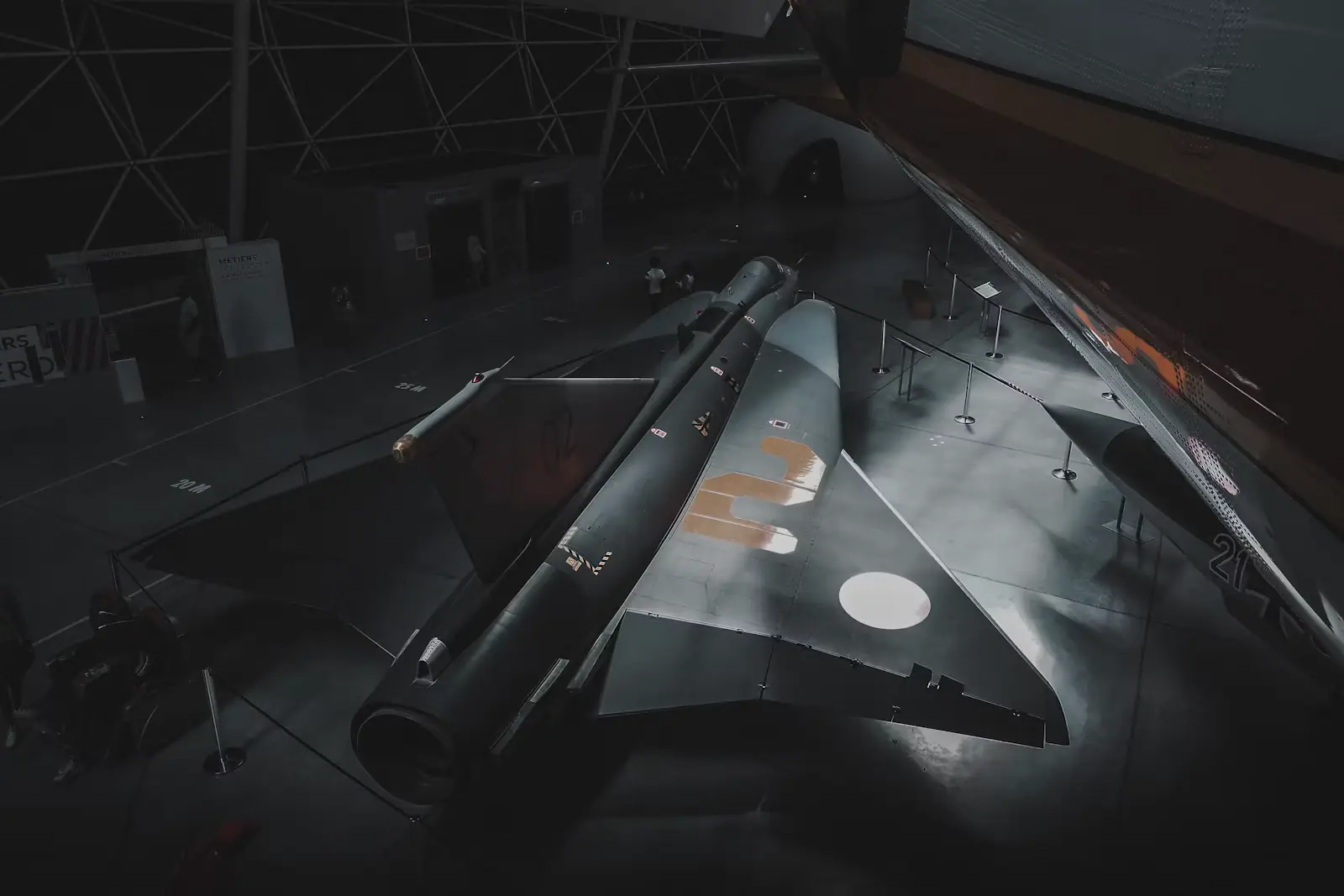
The Air Force Armament Museum is the one to prioritise, and the fact that it is free surprises people. It sits on Highway 85 south of Eglin's gate, so no base credentials are needed and no security queue applies. Inside is the armament story (the weapons Eglin exists to test), and outside is an airpark you can walk among. An SR-71 Blackbird has been on the site since 1990. The interior keeps daytime hours and the airpark is generally accessible from sunup to sundown, but confirm current times before driving out.
Heritage Park & Cultural Center in downtown Fort Walton Beach is the civilian counterweight: the Indian Temple Mound Museum, a National Historic Landmark mound, the restored Camp Walton Schoolhouse, the Garnier Post Office and a Civil War exhibits building, all on one site. It is where the Camp Walton part of the story is actually told.
The bases themselves are working installations. Access is for credentialled personnel and sponsored guests, gate policies change, and the honest advice is not to turn up hoping. Do not photograph gates or security infrastructure.
You can walk on Eglin, with a permit
This is the part almost no visitor knows. Around 250,000 acres of the Eglin reservation are conditionally open to public recreation (hiking, fishing, paddling, camping, birdwatching, cycling, disc golf) under a permit system administered by the base's natural resources office, long known locally as Jackson Guard, on Highway 85 at Niceville. Anyone 16 or over needs a permit and photo ID while on the reservation.
The condition is the important word. All or part of the reservation closes at short notice for testing and training, and users are required to check the published public access map daily and observe every closure. This is a live weapons range with longleaf pine on it, not a park that occasionally shuts.
What is out there is one of the largest remaining longleaf pine ecosystems in the world, with steephead ravines, clear sand-bottom creeks and a species list that reads nothing like the beach. Go with the map, the permit and a full tank.
Living beside it for a week
Expect aircraft noise, at odd hours, including some you will not recognise. Expect the occasional deep concussion from the ranges that sounds like distant thunder on a clear day. Neither is a problem; both are worth explaining to children before the first one.
Expect, too, that a large share of the people you meet are connected to the installations: currently serving, retired, or working for a contractor. The Emerald Coast's off-season economy rests on that, which is why this town has a year-round life that purely seasonal beach towns do not.
Air shows happen on this coast, at the bases and over the beach, and their scheduling moves. If one matters to you, check the current calendar rather than a date you read somewhere; the same is true of any public gate event.
Visiting well
A few things that locals notice and visitors rarely think about.
- Do not photograph base gates, fencelines, security posts or the personnel working them. This is not a tourist backdrop and it will be treated seriously.
- Do not try to drive onto a base "to look". Turn around before the gate rather than at it; there are marked turnarounds on the approach for exactly this.
- Take the reservation closures literally. A closed area on the public access map is closed because something is being tested in it.
- Thank-yous land better as questions. People here talk about their work when asked something specific and not when saluted at in a restaurant.
- The museum's volunteers are worth ten minutes of your time. Several of them flew, maintained or tested what you are looking at, and none of the placards say what they can.
Last updated
Opening hours, ordinances and prices move with the season. We re-check this guide rather than rewrite it, and the date above is the last time someone did. How we research and correct.