Top Shelf Tikis Crab Island Adventure 3 hr (opens in a new tab)
Set sail on a lively 3-hour Premium Tiki Boat trip to Crab Island in Destin, Florida, where adventure and relaxation await. This…
3 hours
Prices checked
Museum
Last updated
Four small museums and a prehistoric mound on one downtown block, covered by a single ticket of about five dollars.
Photo: Earth Science and Remote Sensing Unit, Lyndon B. Johnson Space CenterPublic domain
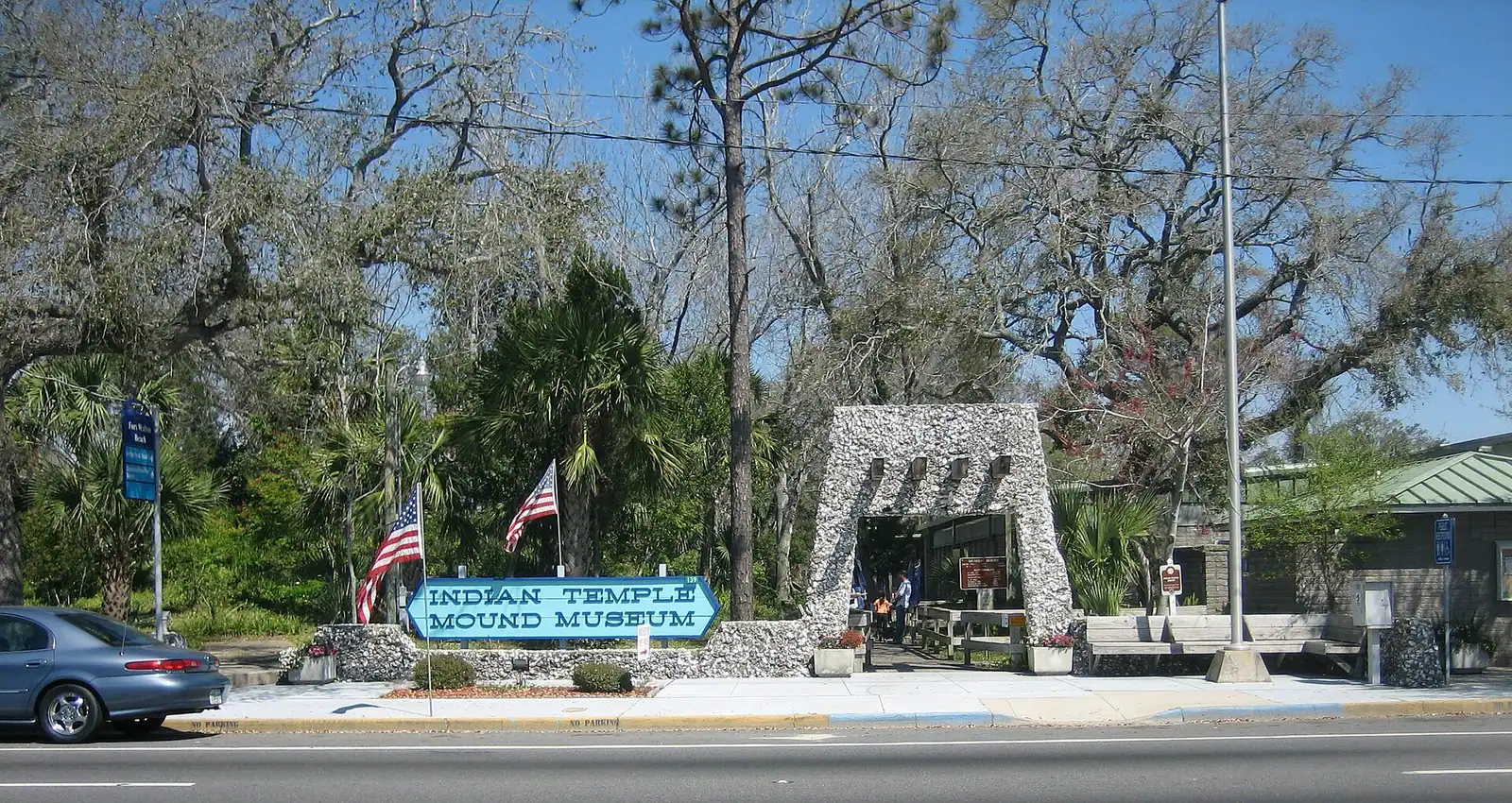
Heritage Park is the City of Fort Walton Beach's history complex, and it is unusual in being genuinely layered rather than merely old. On one downtown block, bounded by US-98 and the ground running down towards Santa Rosa Sound, you get a Mississippian temple mound from around 850 CE, a museum of twelve thousand years of coastal artefacts, a one-room schoolhouse from 1911, a rural post office, and a Civil War exhibit building. One admission covers all of it.
The site works because it is a single place used continuously. The mound was here first. Confederate troops camped beside it in 1861 and called the camp Camp Walton, which is where the town got its name; those soldiers also did the first crude digging into the mound. The schoolhouse served the children of that small settlement from 1912. The post office handled its mail. The museum came in 1962, the first municipally owned museum in Florida. Nothing was moved here to make an attraction — the place accumulated.
The historic buildings and the museum have kept similar hours in recent years, opening Tuesday to Saturday in the middle of the day, and that is the main planning constraint. Two hours covers everything at a reasonable pace; an hour does the mound and the main museum only.
It is the obvious wet-weather answer in Fort Walton Beach, and the obvious answer on a day the double red flags are up on Okaloosa Island. It is also the cheapest serious thing to do in town, and the only one that explains why the town exists at all.
Parking is free on site.
Heritage Park occupies a block on the north side of US-98 in downtown Fort Walton Beach, immediately west of where the highway climbs onto the Brooks Bridge. The temple mound is the visible landmark; the other buildings sit around it.
Free parking is on site behind the museum building.
From Okaloosa Island it is a five-minute drive, and the first thing you reach after coming off the bridge. From Destin, allow half an hour west on US-98. From the Air Force Armament Museum at Eglin, roughly fifteen minutes south on State Road 85.
On foot it is central: Fort Walton Landing on the sound is two minutes away, and the downtown restaurants are within a few blocks. If you are staying downtown rather than on the island, this is one of the few attractions in the county you can reach without driving.
Brooks Bridge replacement works affect the US-98 approach; expect shifting lanes into summer 2027.
Built in 1911 and used by the settlement's children from 1912 until 1936, this is the original one-room schoolhouse rather than a replica. It opened as a museum in 1976.
Inside are early twentieth-century desks, slates, textbooks and the apparatus of a rural Florida education: one teacher, every age in the room, a stove, and a settlement small enough that one room was sufficient for twenty-four years. The desks in particular do the work — they are small, and they are hard, and children visiting tend to sit in them without being asked.
What makes it land is the date range. In 1912, when this schoolhouse opened, Fort Walton Beach was a fishing and turpentine settlement of a few families. East Pass had not been dug. Eglin did not exist. Within the lifetime of a child who sat in one of these desks, the county acquired a barrier island, the Air Force took over half the land area, and the population grew by orders of magnitude.
Fifteen or twenty minutes covers it, and it is the building most visitors say they enjoyed most.
The Garnier Post Office Museum is an original small rural post office, opened as a museum in 1988, presenting the postal history of Camp Walton and Fort Walton with the emphasis falling on the first half of the twentieth century. It doubled as a polling place, which tells you most of what you need to know about how small the community was: one building for the mail and the ballots.
It sounds dry and is not. Mail routes are a good proxy for how isolated a place was, and the material here maps the change from a settlement reached by boat to a town on a highway.
The Civil War exhibit building covers the Confederate encampment on this ground in 1861 — Camp Walton, the source of the town's name — and the coastal war in the eastern Gulf. This was a minor theatre and the exhibit is proportionate to it, but the through-line is what matters: those soldiers were the first people to dig into the mound, and they gave the place the name it still carries.
Ten to fifteen minutes each. Both sit within a short walk of the museum.
One ticket, all buildings. Recently around five dollars for an adult plus tax, with a reduced rate for seniors and military, three dollars for children aged four to seventeen and free under four. For four museums and a National Historic Landmark this is the best value in the county by some distance.
Hours are the catch. The historic buildings and the museum have recently opened Tuesday to Saturday from about 10am to 3pm, with last admission shortly before closing. Municipal holidays close the site. Confirm with the City of Fort Walton Beach before you plan a day around it.
Allow two hours to do all of it properly: an hour in the main museum, fifteen minutes on the mound, and ten to fifteen in each of the historic buildings. An hour is enough if you only want the mound and the museum.
Free parking on site, which matters because downtown parking in this stretch is otherwise fiddly.
Combine it with the Landing, a two-minute walk away on Santa Rosa Sound, for a morning in town that costs almost nothing.
Better than the words "cultural center" suggest, with one caveat about attention span.
What works: the schoolhouse, reliably. Children sit in the desks, register that the desks are for them, and ask questions. The mound works too, because it is outdoors and climbable and twelve hundred years old, which is a number that means something even to a seven-year-old. The pottery cases hold older children who like objects.
What does not: the postal history, mostly. And the whole site is reading-heavy rather than interactive, so a child who needs to press buttons will run out of patience in forty minutes.
The honest comparison for a family in Fort Walton Beach: the Emerald Coast Science Center is the hands-on option, the Gulfarium is the animal option, and the Air Force Armament Museum is free and has aeroplanes you can walk under. Heritage Park is the one that explains the place. Do it in the morning when everyone is fresh, keep it to an hour, and finish at the Landing by the water.
Operators run these trips past Heritage Park, or stop there as part of a longer route. We list what the booking data supports — not everything that mentions the name.
Some links below go to Viator, our booking partner. We earn a commission on bookings made through them — at no extra cost to you, and with no influence on what we recommend.

Set sail on a lively 3-hour Premium Tiki Boat trip to Crab Island in Destin, Florida, where adventure and relaxation await. This…
3 hours
Prices checked

Our product is unique because of how easy it is to walk around and see over the side of the boat. Our boat is stable open air with a…
1–2 hours
Prices checked

Tour Highlights: 1. Crab Island Exploration: This submerged sandbar is renowned for its crystal-clear emerald waters (at high tide as…
3 hours
Prices checked

Experience the thrill of dolphin-watching with Hydrojet on an excursion that navigates Crab Island, showcases a scenic cruise of Destin…
1 hour
Prices checked

Come join us on the water, create memories and photo ops that will last a lifetime on the most photographed vessel in the harbor in the…
3 hours
Prices checked

Experience Crab Island on a small-group Destin boat tour limited to just 6 guests. Unlike crowded party boats, this intimate charter…
3 hours
Prices checked
Straight-line distances, so allow more on the road — the island is long and has one main parkway.

A Mississippian-era earthwork on US-98, designated a National Historic Landmark in 1964, with a museum of local artefacts beside it.
1–2 hoursRecently around $5 for adults, slightly less for seniors and military, $3 for children 4–17 and free under four, plus tax. One ticket covers every Heritage Park building.260 ft away
Photograph: Infrogmation

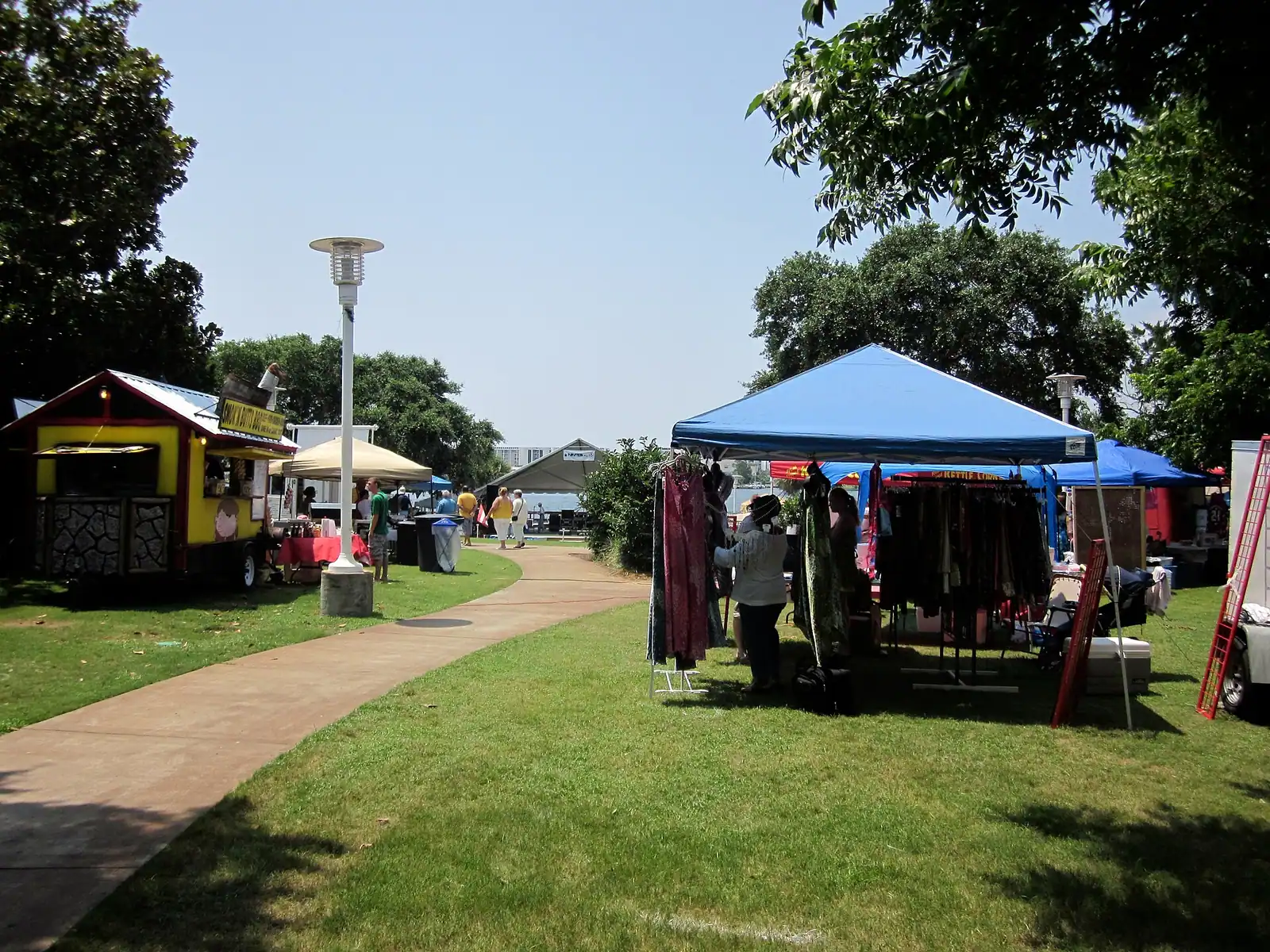
Seven hundred feet of Santa Rosa Sound waterfront, rebuilt and reopened in April 2026, with free Friday concerts through the summer.
1–3 hoursFree, including the concerts, the boardwalk, the fishing pier and the paddle launch. Parking is free.580 ft away
Photograph: Infrogmation of New Orleans

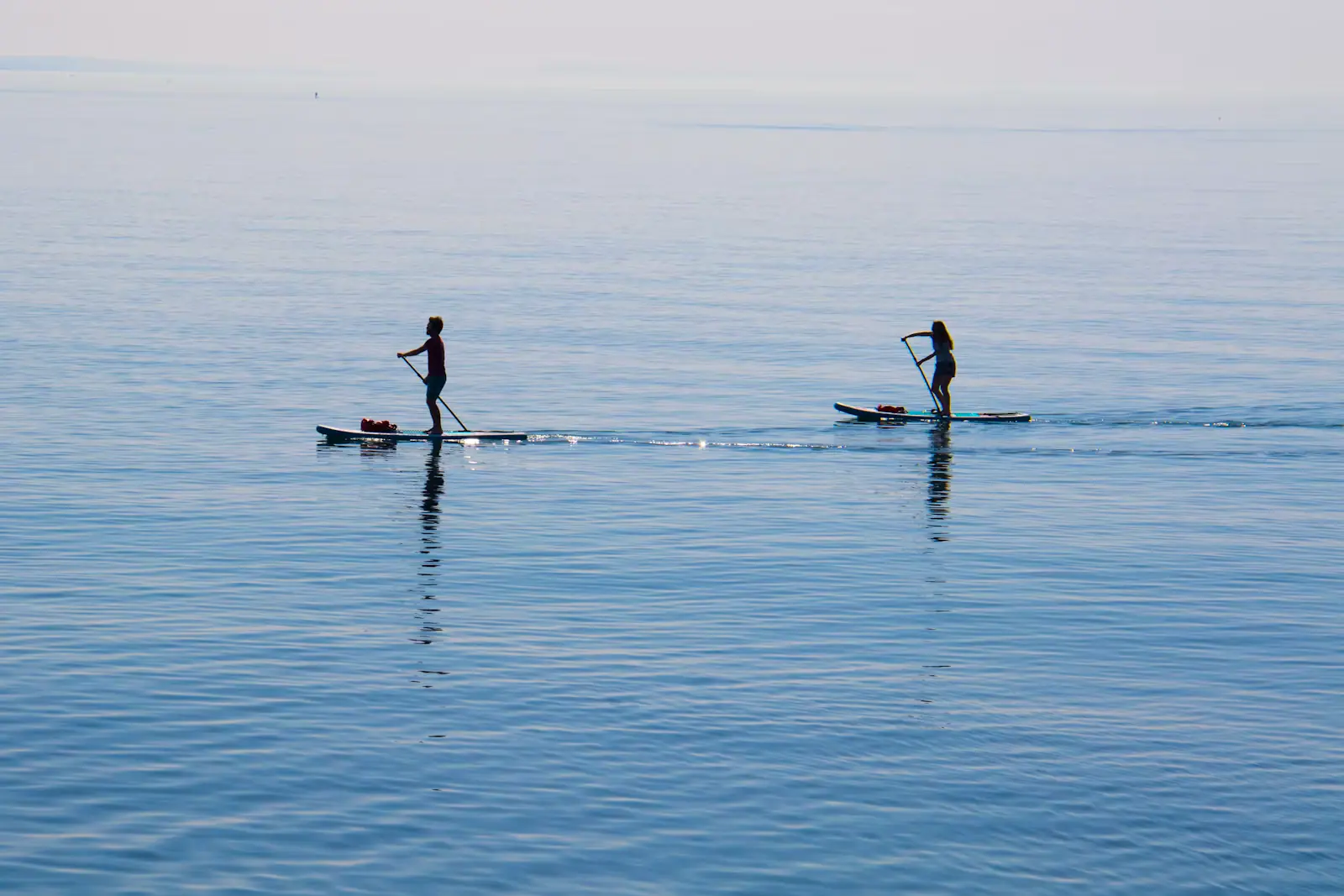
Thirty-odd miles of waist-deep water between the mainland and the island, with a shipping channel dredged straight down the centre of it.
1–5 hoursFree. Public access points on both shores cost nothing; equipment hire and boat fuel are separate.1 mi away
Photograph: Unsplash

A small hands-on museum downtown with an animal room and a makerspace: ninety minutes, and the best wet-morning answer in town.
1–2 hoursAround $10 to $13 per person in recent years, children charged from about three years old.1.4 mi away
Photograph: Wikideas1
Where this place fits into a day, and the pages that plan one.

The water colour here is not a marketing decision. Sand on this part of the Panhandle is close to pure quartz, ground out of the southern…

An attraction in this town is usually a landform. There is no theme park on the mainland, no aquarium chain, no historic district of restored…

The case for bringing children here rather than eight miles east comes down to three unglamorous facts. Parking at the main Gulf beach accesses on…

Most beach towns have a military base somewhere nearby. Fort Walton Beach is the other way round: the base has a beach town attached to it. Eglin…
Photograph: Unsplash

A town of twenty thousand people should not have this much to do indoors. Fort Walton Beach does, and the reason is not tourism planning. It is the…
Photograph: Unsplash

One of the largest military installations on earth sits behind this town, and the reason the beach road was ever paved. Most of it is closed. The best parts are free.
7 min readShelby Duval
Photograph: Unsplash
Five things on one block: the Fort Walton temple mound, a National Historic Landmark from around 850 CE; the Indian Temple Mound Museum; the Camp Walton Schoolhouse, an original one-room school built in 1911; the Garnier Post Office Museum; and a Civil War exhibit building covering the 1861 Confederate encampment that gave the town its name. A single admission of about five dollars covers all of them.
Two hours does everything at a comfortable pace: about an hour in the main museum, fifteen minutes on the mound and its interpretive panels, and ten to fifteen minutes in each of the three historic buildings. An hour is enough if you want only the mound and the museum. The buildings are all within a short walk of each other, so there is no travel time between them.
Recently Tuesday to Saturday, roughly 10am to 3pm, with last admission shortly before closing and municipal holidays closed. Those are short hours by any standard and they catch visitors out, because there is no chance of dropping in on the way back from the beach in the late afternoon. Confirm the current schedule with the City of Fort Walton Beach before you build a morning around it.
The schoolhouse is the winner: children sit at the 1911 desks unprompted and start asking questions. The mound works too, being outdoors and genuinely ancient. The postal history does not hold them. The site is reading-heavy rather than hands-on, so keep it to about an hour, go in the morning, and finish at Fort Walton Landing on the water two minutes away.