Skip to content
Search
Menu

We take a commission on these bookings through Viator. You pay the same, and the commission did not pick the list.

Seasonal

From 1 May the Beach Belongs to the Turtles at Night

Loggerheads, greens and the occasional leatherback nest on this coast for six months of the year, and the rules that protect them are small and easy to keep.

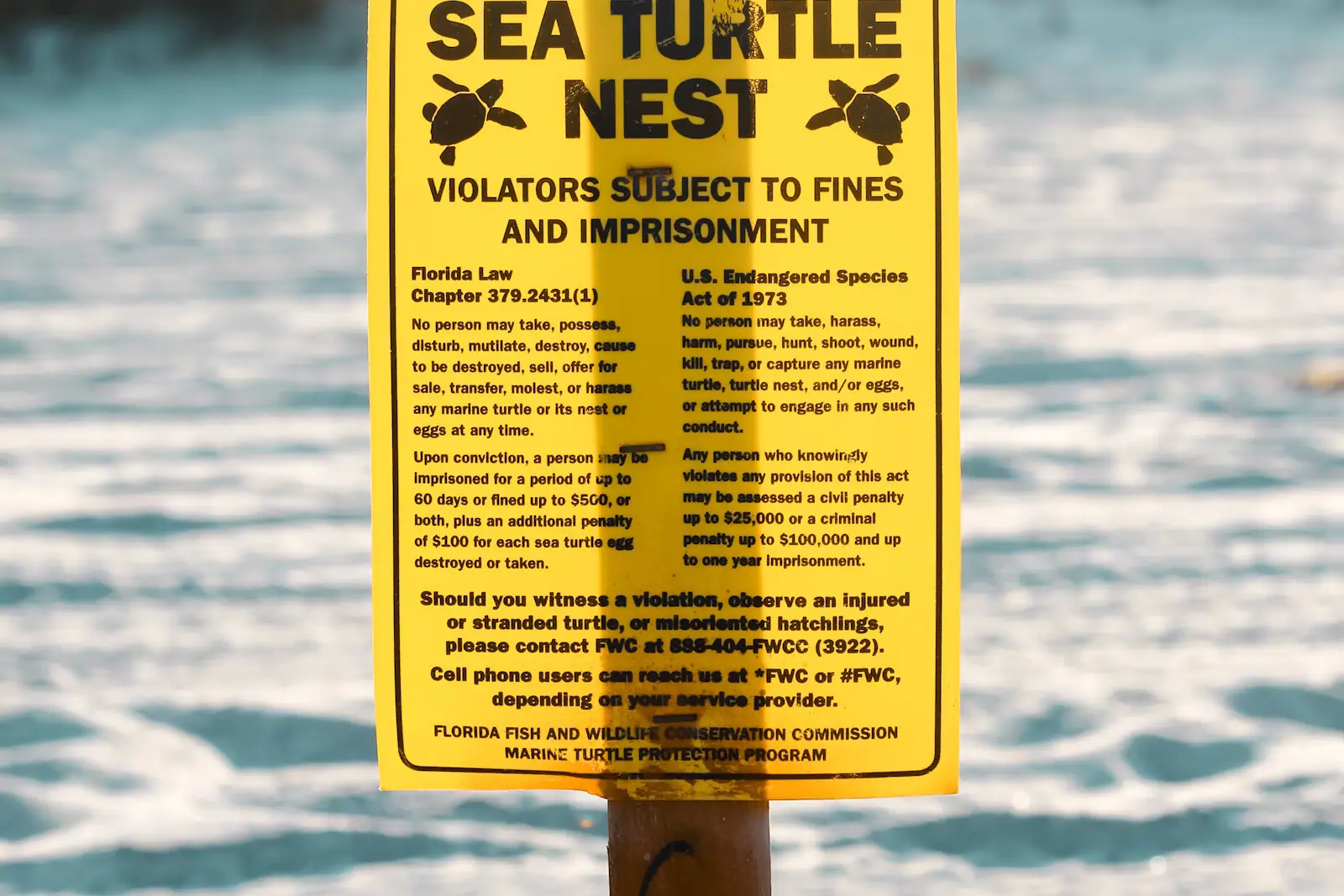
A yellow sign staked into white sand warning that sea turtle nests must not be disturbedUnsplash

Sea turtle nesting season on the northwest Florida coast runs from 1 May to 31 October. Loggerheads do most of the nesting on this stretch. Greens turn up in smaller numbers and a leatherback occasionally. Through those months, beachfront lighting restrictions apply along the developed shoreline, because artificial light visible from the beach disorients both nesting females and emerging hatchlings.

What that asks of a visitor is genuinely minor:

  • Fill in holes and level sand castles before you leave. A hatchling that falls into a hole does not climb out.
  • Take chairs, umbrellas, tents and toys off the sand overnight. Anything left out is an obstacle.
  • No torches or phone lights on the beach after dark, and no camera flash near a nesting turtle.
  • Close curtains on Gulf-front balconies at night and switch off decorative outdoor lighting.
  • Leave marked nests alone. They are staked and taped for a reason.

The rehabilitation side

The Gulfarium on Okaloosa Island (open since 1955 and one of the oldest marine parks in the country) runs the Gulfarium C.A.R.E. Center, established in 2015 as its non-profit arm. Its name stands for Conserve, Act, Rehabilitate, Educate, and it rehabilitates roughly a hundred sea turtles a year, releasing them back into the Gulf.

Some of those releases are public and they happen on beaches along this coast, occasionally with a satellite tag attached. They are not scheduled far in advance, because they depend on an animal being ready. If one falls in your week, it is worth rearranging the day for.

If you find a turtle

Do not touch it, do not put it back in the water, and do not crowd it. A stranded, injured or disoriented turtle, or a hatchling heading the wrong way, should be reported to the Florida Fish and Wildlife Conservation Commission's wildlife alert line, which is published on the FWC's own site. Give the beach access point you are standing at, which is why those signs have numbers on them.

SourcingSummarised from Florida Fish and Wildlife Conservation Commission guidance on sea turtle nesting and coastal lighting, from the published 1 May to 31 October nesting season used by Okaloosa and neighbouring counties, and from the Gulfarium C.A.R.E. Center's own description of its rehabilitation and release programme. Local lighting ordinances differ between jurisdictions on this coast; check the rules for your specific property.

Plan around it

What this means for visitors

The pages that carry the practical detail behind this story — hours, costs, access and where it sits on Fort Walton.

  • Things to do

    Beaches

    Fort Walton Beach beaches explained: the mainland-to-island crossing, free parking at Beasley, sound-side calm water, and the Okaloosa…

  • Things to do

    For Families

    Family activities in Fort Walton Beach: free beach parking, the Gulfarium, a free air museum, Crab Island with kids, and what a day really…

  • Things to do

    Attractions

    Every attraction in and around Fort Walton Beach: the temple mound, the Armament Museum, the Gulfarium, Crab Island, the beach parks and…

  • Things to do

    Things to Do

    Things to do in Fort Walton Beach, Florida, sorted by where you stand: downtown, Okaloosa Island, Crab Island and the bay, the Gulf, and…

Related

Explore For Families

This story touches something you can book. These are live listings from our booking partner, not a recommendation attached to the report above.

We take a commission on these bookings through Viator. You pay the same, and the commission did not pick the list.

Newsroom

More from the newsroom

Who reported this

Family & Practical Editor

Tamika writes the pages people actually open in the car park: which beach lot is free, where the lifeguards and the ramps are, what the double red flag means and what it costs to ignore it. She tests the family logistics with her own children in tow, and she would rather tell you a museum is small than let you drive there expecting otherwise.

Our newsroom is machine-assisted and human-edited: stories are drafted from verified public sources and checked before they publish. How that works is set out in our editorial standards.

More from Tamika Rowe